

last updated:
March 13, 2026
min read
Foods high in estrogen, explained: Phytoestrogens, hormones, and what the science says



If you’re looking for foods high in estrogen, you’ve come to the right place, but not for the reason you may expect. The concept that some foods automatically increase estrogen isn’t true. Instead, estrogen-rich foods help balance hormones, potentially helping those with high or low estrogen levels. Ahead are 15 foods that have this balancing effect, plus ways to incorporate phytoestrogens and other essential nutrients into your diet.
You’ve probably heard the rumor that some foods are high in estrogen (I’m looking at you, soy). However, labeling phytoestrogens and other nutrients that impact hormonal health as “high estrogen foods” is a bit misleading. These foods don’t always increase estrogen, but rather balance levels of this hormone, making them potentially beneficial for anyone struggling with high or low estrogen (and for people looking to maintain hormonal health more generally).
In this guide, we’ll clarify exactly how phytoestrogens and other nutrients impact estrogen levels, as well as reveal foods high in phytoestrogen. By the end, you’ll be able to update your grocery list with hormonal health in mind and have actionable ways to incorporate these nutrients into your diet.
The term “high estrogen foods” is a bit deceptive. It brings up images of eating soy, followed by estrogen levels skyrocketing. Instead, estrogenic foods work to balance hormonal health, almost like how a long walk can reset your mood and preserve overall health.
And while we’re discussing estrogen-balancing foods, they don’t all fall into the same subtype. “There are two categories of foods that boost estrogen,” says Felice Ramallo, MSCN, RDN, LD/CDN, lead dietitian at Allara, “those with phytoestrogens and those with nutrients that are part of the building blocks of healthy hormones.”
Phytoestrogens are metabolites found in plant-based foods that are similar in structure to the estrogen our body produces. Estrogen is sometimes nicknamed the “female sex hormone.” While it does play a role in the menstrual cycle and pregnancy, it has a lot of other job responsibilities too, no matter your sex.
To name a few, estrogen helps regulate blood sugar levels, maintains bone strength and structure, lowers the risk of heart disease, and may even boost immune response. In many ways, estrogen is kinda like that friend who somehow does it all while looking effortlessly put together.
While I wish I knew that friend’s secret, I can tell you estrogen’s: once it’s produced, estrogen interacts with estrogen receptors throughout the body. These interactions cause far-reaching benefits.
Phytoestrogens act similarly to estrogen, which is why they’re referred to as selective estrogen receptor modulators (SERMs). “This means that we can see high phytoestrogen foods as balancing,” explains Ramallo. She adds that when estrogen levels are high, phytoestrogens bind to estrogen receptors to help prevent overstimulation by the body’s excess estrogen. When levels are low, they provide a mild stimulation to estrogen receptors that otherwise may not be activated. Basically, phytoestrogens may be beneficial if estrogen levels are too low or too high.
According to Ramallo, phytoestrogen foods can be grouped into four main categories:
While phytoestrogens often dominate conversations on foods that increase estrogen, some other nutrients may help balance this hormone too:
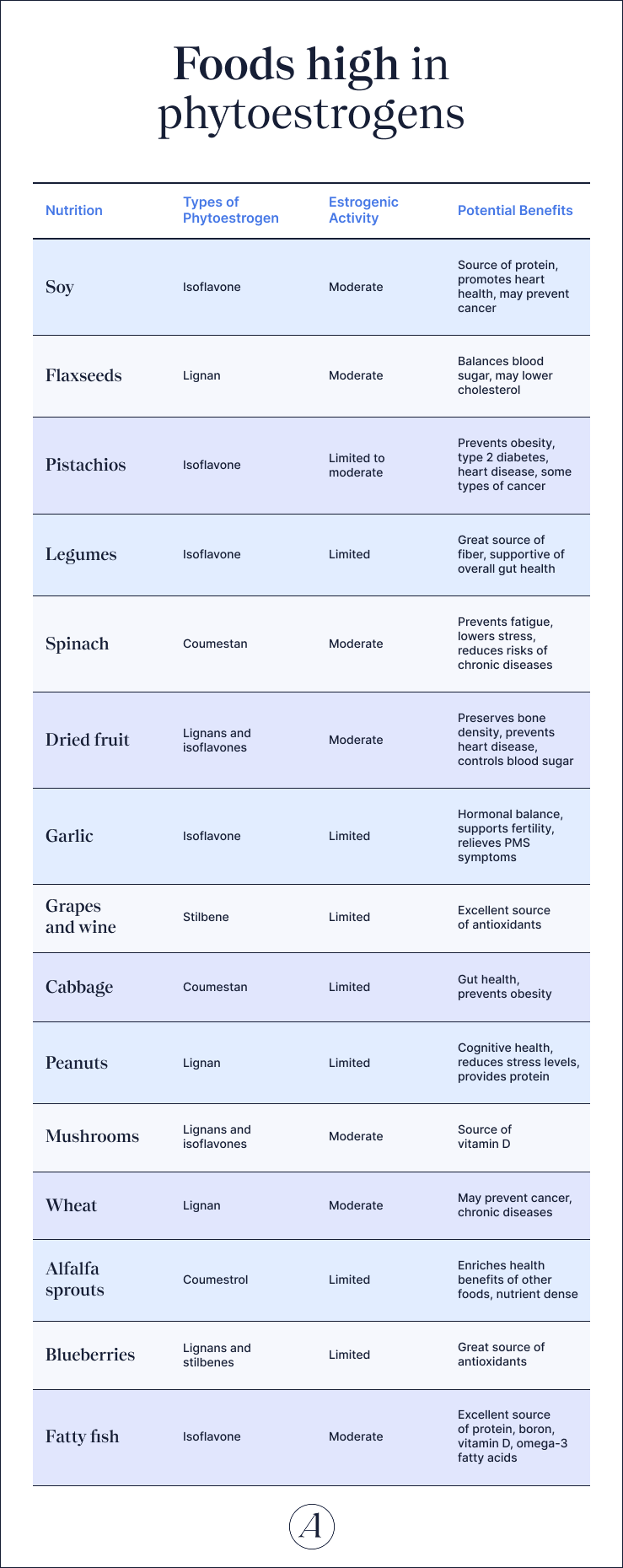
Many foods contain phytoestrogens. Even better, estrogen rich foods tend to be part of a healthy diet (i.e. veggies, fruits, nuts, legumes, and seeds). That said, some foods have a higher concentration of plant based estrogen, such as the 15 below.
Soy and soy-based foods (think: tofu, soy burgers, and edamame) are probably the best known source of phytoestrogens—and for a good reason. “Soy has one of the highest concentrations of phytoestrogens and is a source of lean heart and hormone-healthy protein,” says Ramallo.
Seeds aren’t just for planting trees; they make a great addition to salad, soups, and more. Ramallo says flaxseeds are particularly high in phytoestrogens, “particularly lignan, which shows special promise in key menopause symptoms,” she says. “Seeds are also amazing for digestion, cholesterol, and blood sugar balance.”
Most nuts contain phytoestrogens, but pistachios have one of the highest concentrations. They may also be beneficial for gut health and offer some protective effects against excess weight gain, which can be a symptom of conditions that cause high estrogen levels.
Legumes, like beans and lentils, are known for their phytoestrogens, but they offer other health benefits, says Ramallo. She explains, “The high fiber and nutrient content is amazing for the gut bacteria that help keep us healthy.”
As a coumestan, spinach may have a slightly higher concentration of phytoestrogens. It’s also an excellent source of iron, magnesium, and vitamins A, K, and C. Because it’s so nutrient dense, it offers many mental and physical health benefits, such as preventing fatigue, lowering stress, and even reducing the risks of some chronic diseases.
Dried fruits contain two types of phytoestrogens, often in a higher concentration than fresh fruit. These estrogen-rich fruits have particular benefits for those in the menopausal transition, especially when it comes to preserving bone density and preventing heart disease.
Garlic is another great source of isoflavonoids that can be added to pastas, stir fries, soups, and more. Much of the research on garlic’s phytoestrogen properties has been related to female reproductive health, and it may reduce PMS symptoms as well as support fertility.
Grapes (with the skin) and wine are excellent sources of stilbene. Just make sure that if you drink wine, you follow the CDC’s safe drinking guidelines (one drink or less a day for women, two drinks or less a day for men).
Cabbage is another source of phytoestrogens. When fermented, it also contains probiotics, which are beneficial to gut health and digestion.
Peanuts are another great source of phytoestrogen and offer a variety of other health benefits. They can be a source of protein, may reduce stress, and can even boost cognitive health.
Mushrooms have a limited concentration of phytoestrogens. They’re still amazing for hormonal health, however, thanks to the vitamin D they contain. “Mushrooms, especially if dried and then set in the sun for a few hours, are an all-natural whole-food vitamin D supplement,” says Ramallo.
Wheat is another source of lignans, with additional properties that may prevent some types of cancer and some chronic diseases. For the most health benefits, opt for whole grain options, such as whole wheat breads and pasta, quinoa, and brown rice.
Alfalfa sprouts contain coumestrol, which may help balance estrogen levels. These sprouts can also lower cholesterol levels.
Blueberries contain two types of phytoestrogens: lignans and stilbenes. They’re also a great source of antioxidants, and they support heart health, reduce the risk of type 2 diabetes, support brain health, and can even help repair muscle damage from exercising. That said, blueberries have fewer phytoestrogens than dried fruits with estrogen.
Most of the foods on this list are plant-based because phytoestrogens are found in plants. Fatty fish like salmon, sardines, and mackerel, however, absorb some phytoestrogens through the fishes’ plant-based diets.
Ramallo often recommends these as well since they are high in omega-3 fatty acids, vitamin D, and boron. She explains, “These are key to estrogen synthesis, in addition to a slew of other benefits.”
Most natural sources of estrogen don’t directly increase estrogen levels. Rather, they help balance estrogen. For phytoestrogens specifically, their effect can either mimic estrogen or provide anti-estrogen properties, depending on what the body needs. This means that these foods may be beneficial to those who have lower estrogen levels or high levels. Most are also just part of a balanced diet that supports overall hormonal health.
Estrogen-rich foods can offer many benefits, including the six below. For maximum benefits, aim for a diet with a variety of phytoestrogen types.
Phytoestrogen foods for menopause and perimenopause may help reduce vasomotor symptoms, the medical term for night sweats, hot flashes, and hot flushes. These are one of the most common symptom types, with up to 80% of people experiencing hot flashes during this life transition.
Phytoestrogens, especially isoflavones, may support bone health. This is especially important for people going through perimenopause, menopause, or postmenopause, since the natural decrease in estrogen levels during these phases increases the risk of osteoporosis, a health condition where someone has weaker bones.
Phytoestrogens can protect cardiovascular health in a few key ways. For one, they lower cholesterol, which can buildup in blood vessel walls and increase the risk of heart attacks and strokes. They may also help regulate blood pressure, reducing the risk of cardiovascular disease.
Phytoestrogens may help manage PCOS symptoms. “For people with PCOS, phytoestrogens fill a very special function as the population is prone to excess estrogen,” says Ramallo, “which can contribute to heavy periods and struggles with weak ovulations due to trouble properly maturing and releasing eggs that may not produce enough progesterone to trigger regular cycles.”
Low levels of estrogen are associated with a higher chance of Alzheimer’s disease and dementia. This is because of how estrogen interacts with estrogen receptors in the brain, and phytoestrogens can interact in a similar way. In fact, a diet high in phytoestrogens may improve memory and brain plasticity, which is important for learning new skills and keeping cognition sharp.
This one is still being studied, which is why the word “may” is necessary. Some early research suggests phytoestrogens are associated with a lower risk of breast cancer and prostate cancer. They may also possibly reduce the risk of breast cancer reoccurring.
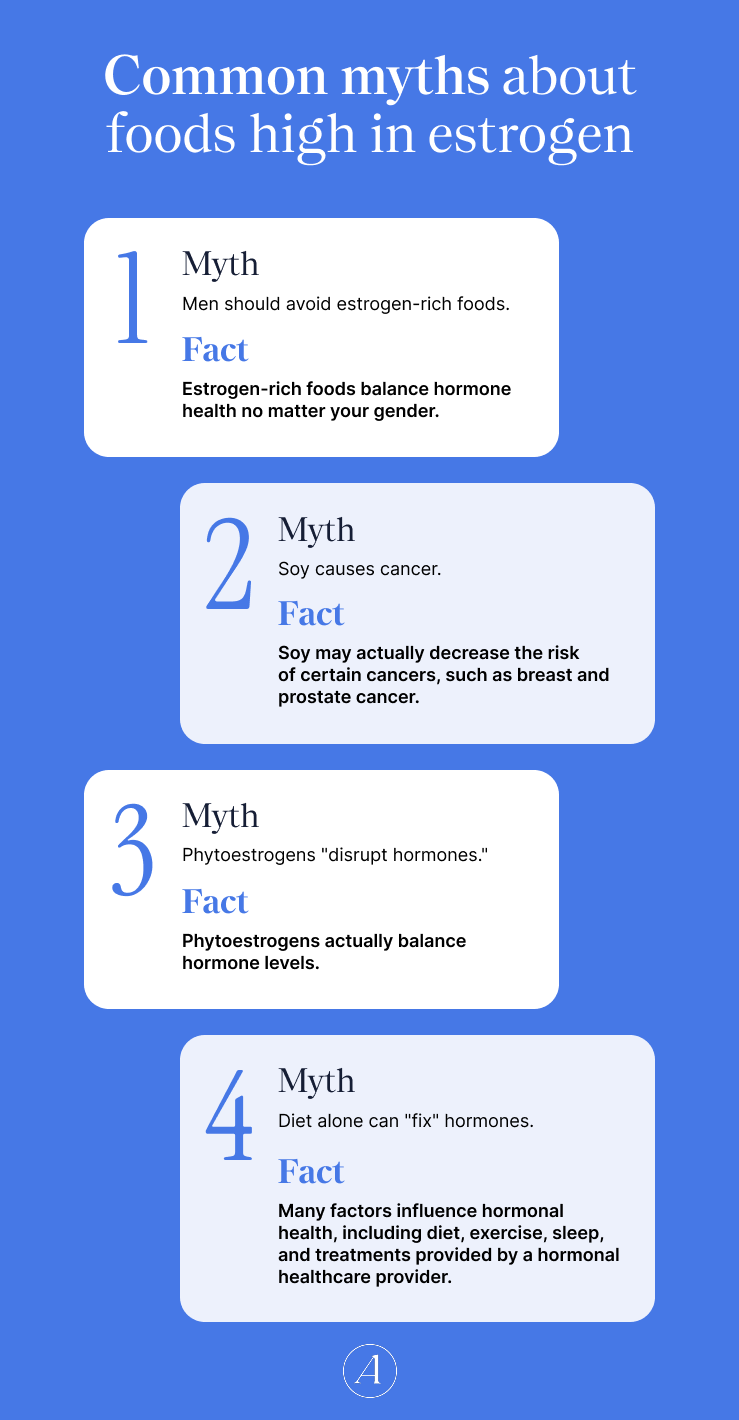
Like any hot topic, there are a lot of rumors about estrogen. Many of these are myths, including these four:
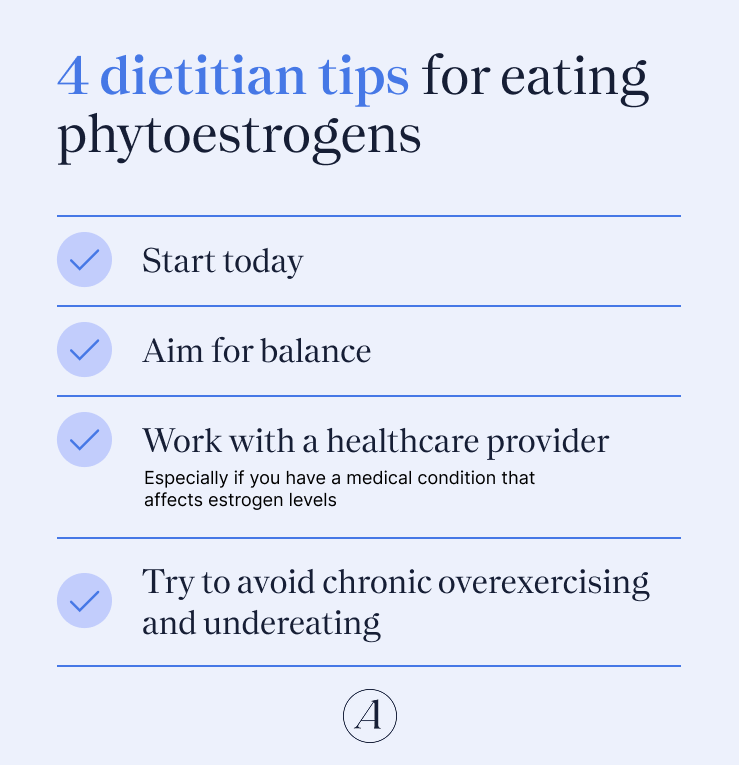
I’ve spent a lot of time waxing poetic on phytoestrogens, but how exactly do you incorporate these foods into your diet? These four tips can help.
When it comes to incorporating these foods, now is the best time to start, no matter your age. “We see the greatest effects in individuals who started eating these sooner in life,” Ramallo explains, “Consuming soy throughout the lifespan, and not simply starting at menopausal transition may contribute to some of the best long-term benefits, including protection from some breast cancers.”
As the list above demonstrates, many whole foods contain phytoestrogens. One of the most sustainable ways to incorporate these foods is to eat a balanced diet with a variety of estrogen-rich foods. That means instead of trying to eat soy everyday, incorporate soy, flaxseeds, legumes, whole grains, and nuts into meals throughout the week.
If you’re curious about how to incorporate these foods into your diet, a registered dietitian with training in hormonal health can help. This is especially crucial if you have a condition that impacts estrogen levels, such as PCOS, perimenopause, menopause, or symptoms of high or low estrogen that are undiagnosed.
“Chronic under-eating and over-exercising tanks estrogen,” says Ramallo, “Eating enough calories and protein are absolutely building blocks of healthy estrogen levels. Healthy estrogen is key to the toned figure that many women have been aiming for.”
The “right” amount of calories and proteins depends on your age, activity level, and other factors. The MyPlate Calculator can help you determine how much to eat and from what food groups.
Whenever symptoms of low estrogen or dangerously high estrogen are present, consult a healthcare provider who specializes in hormonal health, such as the team at Allara.
Signs of low estrogen include:
Signs of dangerously high estrogen include:
There isn’t a single food that has the most estrogen in it. Many whole foods, such as fruits, veggies, legumes, and nuts, can be high in phytoestrogens. That said, some specific foods with high phytoestrogen levels include soy, flaxseeds, fatty fish, and legumes.
Men should not avoid foods high in estrogen because the term is deceiving. Most estrogen-rich foods either contain vitamins that help balance overall hormonal health or phytoestrogens, which can have estrogenic or anti-estrogen effects depending on the individual’s estrogen levels.
Phytoestrogens are an essential part of a balanced diet. They impact estrogen receptors, either having estrogenic effects in those who are low on estrogen or anti-estrogen effects in people with high estrogen levels. Plus, many are found in whole foods, like spinach, mushrooms, and legumes, that provide other health benefits.
“I was given an explanation of how my hormonal imbalance was affecting me as a whole - body & mind - & tools so that we could start to manage my condition. I am happy to announce after a year of trying, I found out that I was pregnant & I couldn’t be happier!”


“This is genuinely the first time in my 7 years of being diagnosed, that I have felt seen and heard.”

“The Allara Community gives me the courage and support to continue my PCOS journey - I am never afraid to ask the hard questions and love hearing from other women with the same challenges.”

"My doctor went above and beyond making sure I had all the necessary tests, but also tremendously helped me in understanding my diagnosis, helping me change my lifestyle, and making sure I get the treatment I deserve."

"Before Allara I had no real direction or understanding of what it meant to have PCOS. Now I have a team of people that take time to explain every single thing to me, ask me how I feel and let me be a part of my treatment plan."


