

last updated:
August 13, 2026
min read
Managing PCOS facial hair: From hormone therapy to at-home solutions


Noticing extra fuzz or stubborn chin hairs that won’t quit? PCOS facial hair might be the culprit—and understanding why it happens is the first step to managing it (without losing your mind or your confidence).
If you’re dealing with PCOS facial hair, you’re far from alone. In fact, about four to 11% of people assigned female at birth (AFAB) experience hirsutism—that’s what doctors call excess hair growth in places typically associated with “male” patterns, like the chin, upper lip, or jawline. PCOS hair growth can be one of the most visible (and frustrating) signs of hormonal imbalance in people with polycystic ovarian syndrome (PCOS).
As someone deep in the throes of perimenopause, I get it. Hormonal chaos is my constant companion—irregular cycles, moody nights, and, yes, a few stubborn chin hairs that seem to appear overnight. While I don’t have PCOS, I absolutely understand the frustration of managing those surprise sprouts and the confusion of conflicting advice online about what actually helps.
In this guide, we’ll break down why PCOS facial hair happens, what treatments actually work, and whether it can ever truly go away. From hormone-balancing therapies to at-home fixes, consider this your judgment-free, science-backed playbook for managing unwanted facial hair—and feeling more like yourself again.
If you’ve ever stood in front of the mirror, tweezers in hand, wondering why new hairs keep popping up along your jawline, you’re not alone.
Hirsutism is the fancy medical term for when hair grows in places typically seen in people assigned male at birth (AMAB). The most common hirsutism symptoms (aka PCOS hair growth areas) include hair on the:
In the general population, about four to 11% of people AFAB experience it, but among people with PCOS, that number is much higher: 65 to 75%.
Normally, our bodies are covered in fine, soft “vellus” hair. But when androgens (hormones like testosterone) rise, those fine hairs can transform into thicker, darker “terminal” hairs. That’s what gives you visible facial or body hair growth.
People with PCOS often have higher-than-normal levels of androgens—like testosterone, DHEA, and dihydrotestosterone (DHT)—and that hormonal imbalance triggers the shift from peach fuzz to stubble.
So why exactly does PCOS cause this spike in androgens? According to Maribelle Faucett, WHNP, there are a few main culprits:
Between elevated androgens, insulin resistance, and extra-sensitive hair follicles, your system’s hormonal harmony gets a little off-beat, and your hair follicles, unfortunately, are often affected.
Wondering if that stubborn chin or lip hair is just a random hormonal hiccup or something more? Diagnosis usually starts by confirming you’re dealing with PCOS. The Rotterdam Criteria are the gold standard for diagnosing PCOS.
To meet the criteria, you need two out of three key features:
Ruling out other conditions—such as non-classic congenital adrenal hyperplasia or adrenal tumors—is also essential to making an accurate PCOS diagnosis, says Faucett.
“If terminal hair (thick, pigmented hair) appears in androgen-sensitive areas like the upper lip or chin,” “other causes … are ruled out,” and facial hair “appears alongside other diagnostic criteria (per the Rotterdam criteria),” it “can be attributed to PCOS,” she says.
To assess the extent of unwanted hair, clinicians often use something called the Ferriman–Gallwey (FG) score—basically a visual grading scale for body hair.
Here’s how it works: nine body areas (including the upper lip, chin, chest, abdomen, back, arms, and thighs) are each scored from 0 (no visible terminal hair) to 4 (coarse, dense hair like a man’s). Add them up, and you get a total score between 0 and 36.
Of course, no one-size-fits-all chart can capture everyone’s reality. Hair growth patterns vary widely by ethnicity, genetics, and age, and many people remove facial hair before exams, making scoring tricky. Plus, adolescents may not show full hair growth yet.
That’s why it’s key to work with a culturally competent provider who understands these nuances and looks at the whole picture, not just a single lab or score. With the right evaluation, your clinician can pinpoint whether PCOS is the cause and tailor a treatment plan that actually works for you.
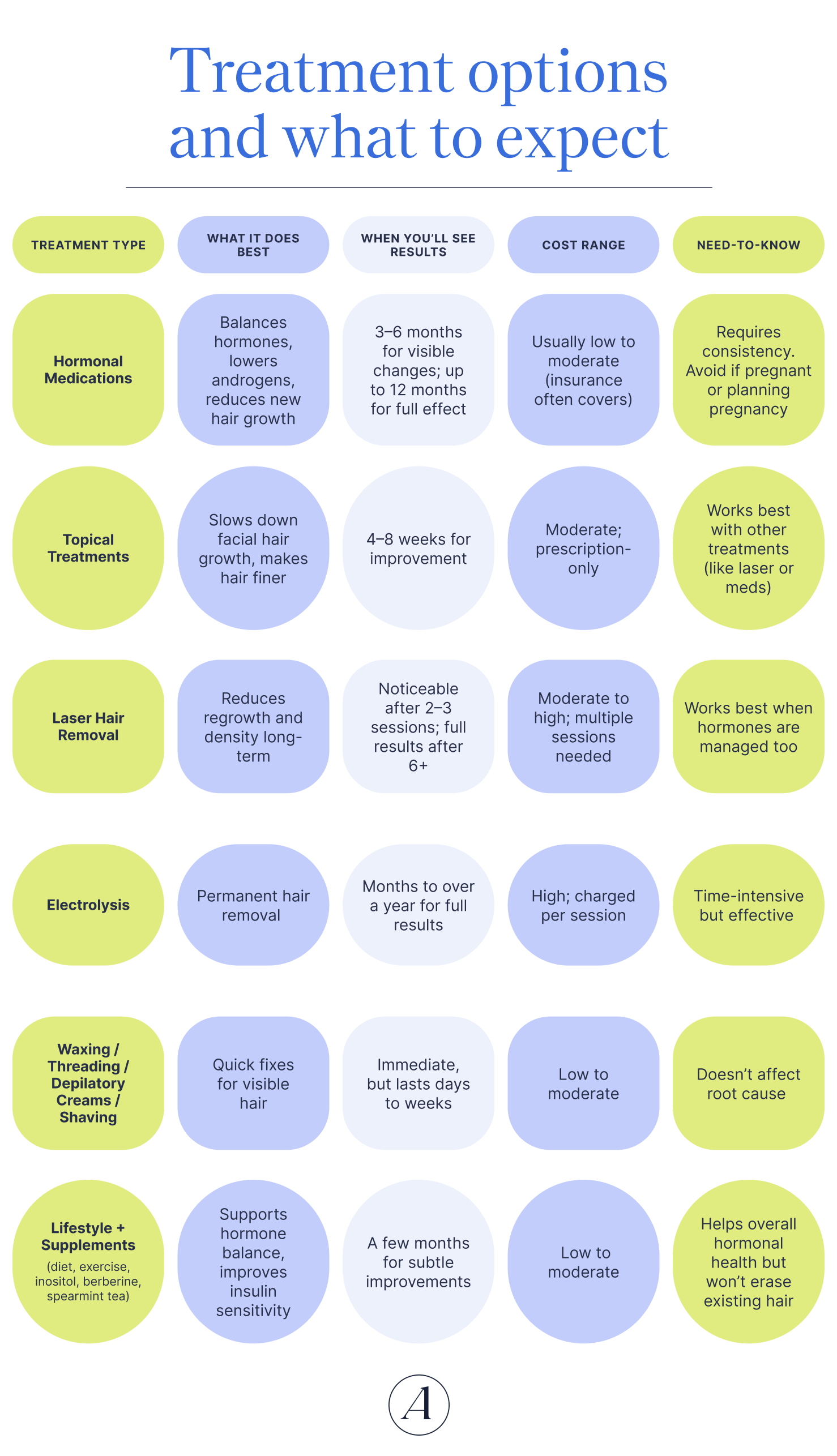
Unwanted facial hair can be one of the most frustrating symptoms of PCOS, but you’ve got options. “Treatment should always be individualized, based on severity and patient preference,” says Faucett. Here’s how to tackle it from every angle—medical hirsutism treatments, cosmetic approaches, and lifestyle changes.
Medication can help stop facial hair growth related to PCOS. Here are some hirsutism medications your provider may prescribe to manage symptoms of PCOS facial hair:
Be patient: “Visible results can take 6–12 months due to the hair growth cycle,” says Faucett. Stick with your plan—it’s a marathon, not a sprint.
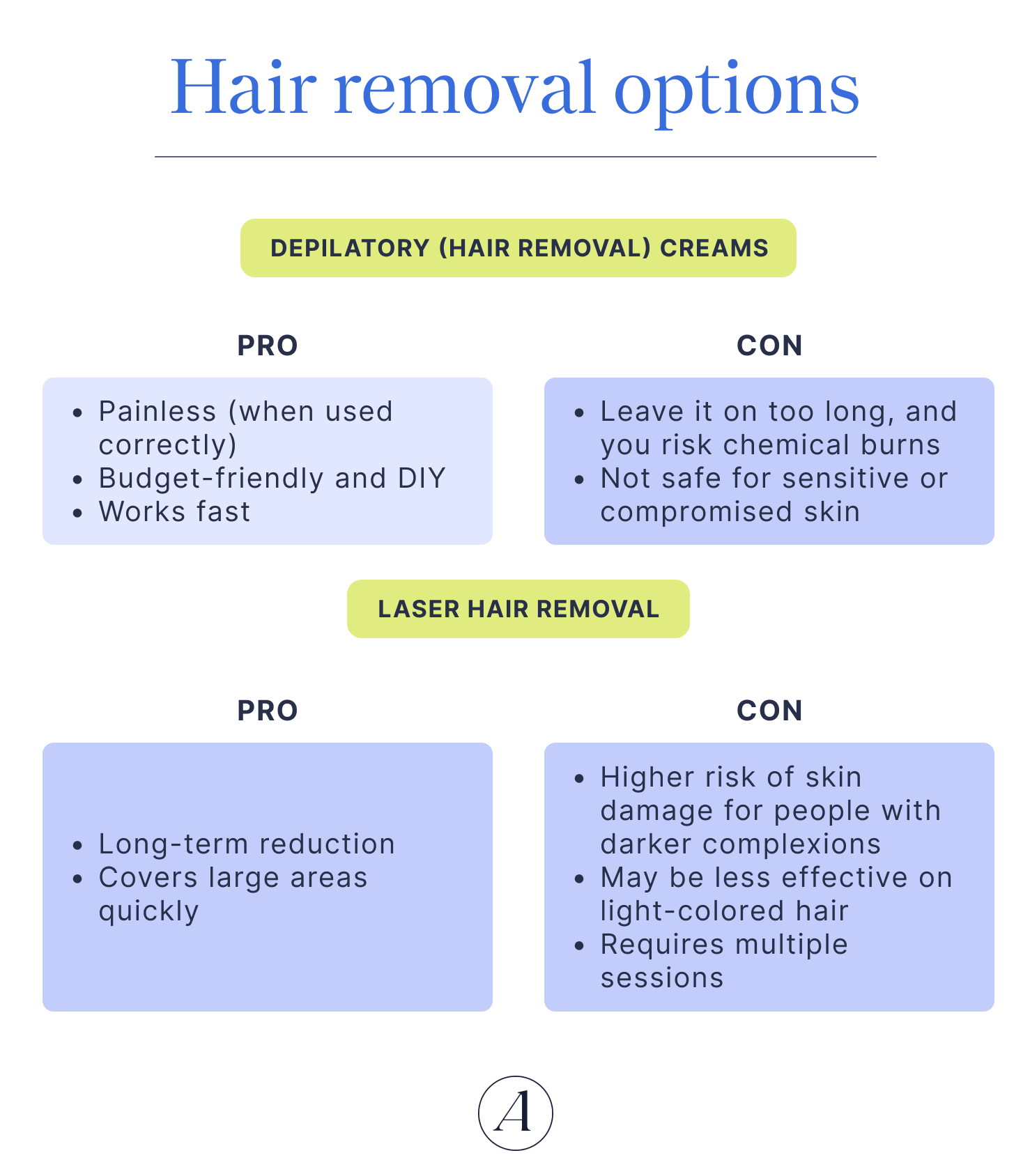
While you treat the cause, you can still treat the frustrating facial fuzz. These cosmetic approaches help manage what’s visible while your hormones get balanced.
Depilatory (hair removal) creams
Quick, easy, and private—these creams use ingredients like thioglycolic acid to dissolve hair at the surface.
Pros:
Cons:
Laser hair removal
Laser treatments zap hair at the follicle using concentrated light beams—fast, efficient, and effective.
Pros:
Cons:
“I typically don’t recommend laser alone without addressing the underlying hormonal imbalance,” says Faucett. The most effective approach often combines oral contraceptives, spironolactone, and laser hair removal for PCOS facial hair to minimize regrowth, she adds.
Electrolysis
Electrolysis for PCOS facial hair is the old-school gold standard. A fine wire delivers a tiny electric current to each follicle, destroying it permanently.
Pros:
Cons:
Shaving
If you’ve got a razor and five minutes, you’ve got an easy fix. Shaving is quick, painless (well, unless you slip), and one of the most budget-friendly ways to do PCOS facial hair removal. And no—despite what your aunt or TikTok told you—it doesn’t make hair grow back thicker, darker, or faster.
Pros:
Shaving’s a solid option when you want instant results, but just be ready for a little texture between sessions.
Waxing
If you want smoother skin that actually lasts, waxing might be your new best friend. Unlike shaving, which gives you a clean slate for all of 24 hours, waxing keeps regrowth at bay for a few weeks (or longer if you’re consistent). Once you get the hang of it, you can even do it yourself (though your first few tries might come with a learning curve).
Pros:
Cons:
Pro tip: If you’re getting a salon wax, make sure the esthetician never double-dips (reusing the same stick in the wax pot). It’s a serious hygiene red flag that can spread bacteria from client to client.
Lifestyle can’t “cure” PCOS (or unwanted facial hair), but it can help support your hormonal balance.
Eat for hormone health
A Mediterranean-style, low–glycemic load diet—rich in fiber, fish, legumes, and healthy fats—has been shown to improve insulin sensitivity, hormones, blood pressure, and even periods. Working with a registered dietitian can make a big difference, says Faucett. They can help you implement the right nutrition to support your hormones.
And adding a cup of herbal tea to your diet can help too. It’s true, spearmint tea for PCOS is a real thing, and there’s some legitimate (though early) data to back it up. “Small studies have shown that drinking two cups of spearmint tea daily can help reduce testosterone levels and improve hirsutism symptoms over time,” says Faucett.
Supplements
A few can support hormonal balance (just run them by your provider first).
“Natural remedies can take the longest to see results, so patience and consistency is key,” says Faucett.
Maintain a healthy weight (for you)
Even a modest 5% weight loss can improve insulin sensitivity and lower androgens. That said, many people with PCOS find weight loss difficult. If lifestyle changes alone aren’t enough, medications like GLP-1 receptor agonists (used for diabetes and obesity) may help make it more achievable.
Move your body
Exercise isn’t just about weight; it also helps reduce stress hormones like cortisol. That matters since stress can fuel androgen levels.
PCOS facial hair takes patience to manage, but you don’t have to tackle it blindly. The best results come from a mix of hormonal management, smart hair removal strategies, and steady lifestyle shifts, all tailored to you.
Myth #1: Shaving makes hair grow back thicker.
Truth: Shaving doesn’t change hair color, thickness, or growth rate.
Myth #2: If you just lose weight or eat “clean,” the hair will go away.
Truth: Diet and exercise can help balance hormones and reduce androgens, but they rarely stop facial hair completely.
Myth #3: Laser or electrolysis will cure PCOS facial hair.
Truth: These treatments can permanently remove existing hair, but new growth can return if hormones remain unbalanced.
Myth #4: Only people with PCOS get facial hair.
Truth: Hormonal shifts from menopause, certain meds, or genetics can also trigger unwanted hair growth.
Myth #5: There’s nothing you can do about it.
Truth: So many options exist from hormone-balancing meds to at-home solutions.
Getting rid of unwanted hair is one thing, but keeping it gone is another story. While hair removal methods can help you stay smooth in the short term, they won’t stop regrowth for good. That’s because the real culprit isn’t the hair itself—it’s the excess androgens driving it.
“At the root, suppressing androgen production or activity will see the most results long term, whether that is through consistent medication or supplement use paired with lifestyle support,” says Faucett. Translation: the most effective plan usually combines internal treatment with external care. And since PCOS can look different from person to person, working with a provider who really knows their stuff is key. They can help fine-tune the right combo for your body.
That said, cosmetic treatments like laser hair removal can be a game-changer when paired with hormonal management. To make sure you get the smoothest—and safest—results possible, try these tips:
The best long-term results come from a one-two punch—treating the hormonal cause from within and managing the visible effects on the surface.
If you’re constantly battling unwanted facial hair, it’s not just a vanity issue. It can mess with your confidence and signal that something hormonal is going on. Conditions like PCOS often show up with excess hair, along with other clues like irregular periods, acne, dark skin patches, or unexplained weight gain.
That’s why it’s worth checking in with your provider if the hair growth is bothering you, or if you’ve noticed other changes in your cycle, skin, or energy. “I recommend a thorough evaluation early on, as soon as the hair becomes unwanted or distressing,” says Faucett. “A specialist can rule out other causes, confirm the diagnosis, and develop a personalized treatment plan.”
If you’re looking for convenient, judgment-free support, the clinicians at Allara can guide you through hormone testing and tailored treatment options, all from the comfort of home.
Dealing with PCOS facial hair can be frustrating, but it’s absolutely manageable. This is a common, treatable symptom of a hormonal imbalance, not a reflection of your femininity. With the right blend of medical care, lifestyle support, and realistic expectations, smooth(er) days are ahead.
“You’re not alone—facial hair is a common and treatable symptom of PCOS,” says Faucett. “It can take time to see changes, but there are effective treatment options available.”
If you’re ready to get to the root of what’s really going on, the experts at Allara can help. Their team will investigate, diagnose, and create a personalized treatment plan, so you can finally get answers, feel in sync with your body again, and move forward with confidence.
You totally can shave your face with PCOS—it's a myth that you shouldn’t. Shaving doesn’t make hair grow back thicker, darker, or faster (promise). It’s quick, easy, and budget-friendly. The only downside? The blunt tip left behind can feel stubbly as it grows out, which might make hair look darker or coarser for a few days. If you want longer-lasting results, consider waxing, laser, or electrolysis. Just keep in mind: no hair removal method can stop PCOS hair growth for good. You’ll need to tackle the underlying cause (excess androgens) to see lasting change.
To stop the hair, you’ve got to stop the hormones driving it. Managing PCOS-related facial hair means targeting excess androgens—the hormones that trigger those coarse, stubborn strands. The most effective approach usually combines medication (like birth control pills or spironolactone) with laser hair removal to slow regrowth, says Dr. Faucett. Lifestyle changes and supplements such as inositol and berberine can also help balance hormones and support your results, she adds.
There are plenty of ways to support hormonal balance without prescriptions. While these won’t completely stop facial hair or cure PCOS, they can definitely help tame symptoms over time. Try:
Kind of! Because waxing pulls the hair out by the root, regrowth can become finer and sparser over time though results vary depending on your hair type. Plus, one session can leave skin smooth for up to three or four weeks, which is a big upgrade from the daily shave grind.
“I was given an explanation of how my hormonal imbalance was affecting me as a whole - body & mind - & tools so that we could start to manage my condition. I am happy to announce after a year of trying, I found out that I was pregnant & I couldn’t be happier!”


“This is genuinely the first time in my 7 years of being diagnosed, that I have felt seen and heard.”

“The Allara Community gives me the courage and support to continue my PCOS journey - I am never afraid to ask the hard questions and love hearing from other women with the same challenges.”

"My doctor went above and beyond making sure I had all the necessary tests, but also tremendously helped me in understanding my diagnosis, helping me change my lifestyle, and making sure I get the treatment I deserve."

"Before Allara I had no real direction or understanding of what it meant to have PCOS. Now I have a team of people that take time to explain every single thing to me, ask me how I feel and let me be a part of my treatment plan."


