

last updated:
December 15, 2025
min read
What is an endocrinologist? What they do and how they help with hormones



Your glands and the hormones they produce can seem a bit mysterious. They make up the endocrine system, which affects everything from sleep, body composition, and energy levels to fertility, sexual function, and so much more. Endocrinologists are care experts to have in your corner for hormonal and gland issues. They coordinate with your other providers to help with whole-body health.
If you’ve ever wondered which “ologist” to see, you’re certainly not alone. The human body has so many systems and organs, and they’re all interconnected in some way. So when you’re searching for a physician to help with a certain condition or specific symptoms, things can get a little confusing.
Take, for example, polycystic ovary syndrome (PCOS) or endometriosis. These conditions affect your reproductive organs, so you might think that seeing a gynecologist is your best bet. But then when you think about these conditions a bit more, you realize they also extensively involve hormones. So should you also see a hormone doctor? What kind of “ologist” is a hormone expert?
“An endocrinologist is a specialist who diagnoses and treats conditions related to hormones and the endocrine glands,” says Sonia Gibson, MD, a board-certified endocrinologist. “Examples of endocrine glands include the thyroid, pancreas, and adrenal glands.”
In this article, we explore the field of endocrinology, when to see an endocrinologist, what these hormone specialists treat, and more.
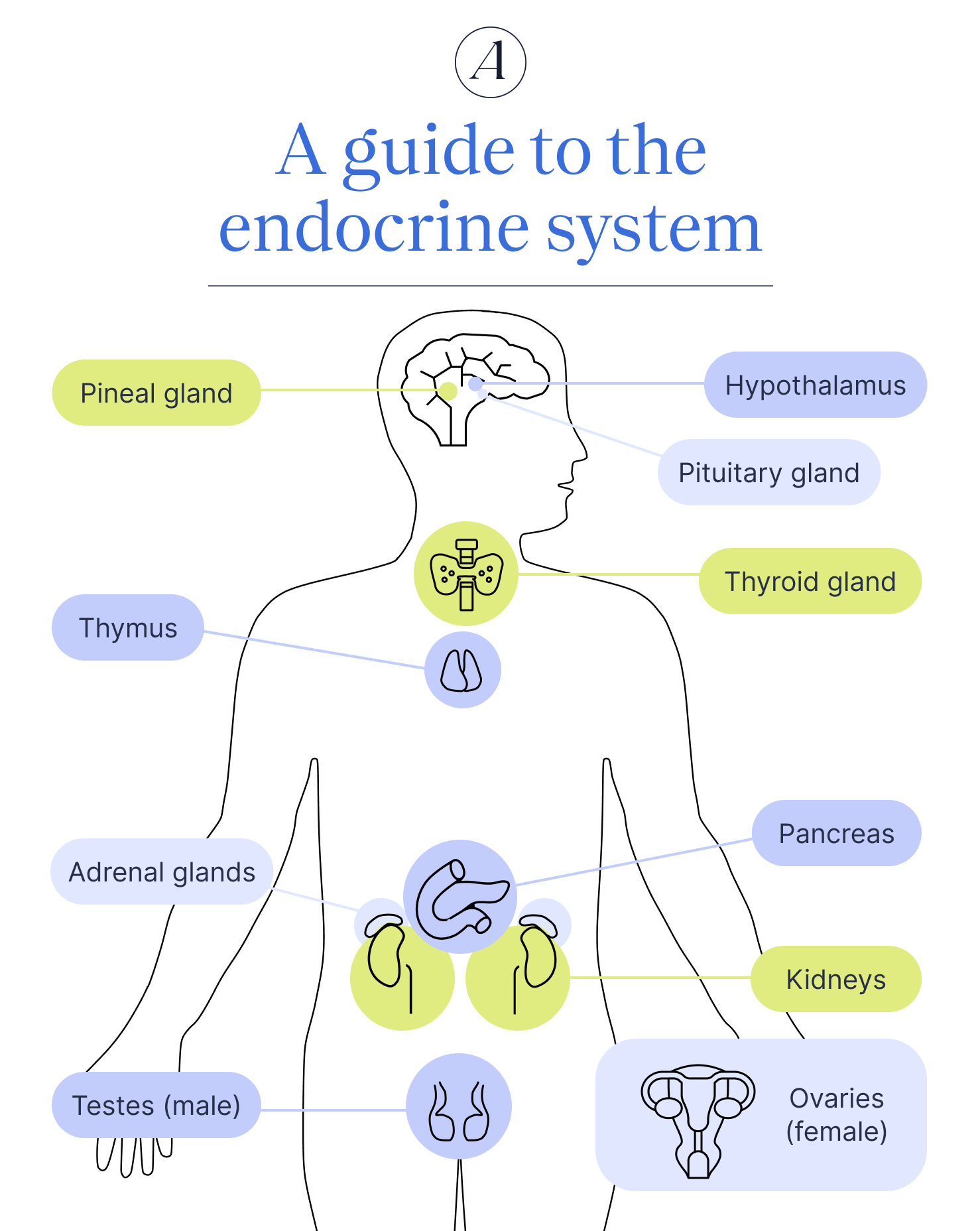
An endocrinologist specializes in the endocrine system. “The endocrine system is a large network of hormone signaling within your body,” Dr. Gibson says. “Hormones act as messengers, communicating with specific cells to regulate many different functions such as energy storage, growth, metabolism, stress response, and glucose control. These hormones are released from the endocrine glands.”
Endocrine glands:
When you’re looking for a female hormone specialist, meaning someone with extensive knowledge about sex hormones such as estrogen, progesterone, testosterone, or the endocrine system in general, endocrinology is where you turn. Endocrinologists aren’t limited to sex hormones, however. They also specialize in metabolic health conditions, including diabetes, and more.
You might be wondering what training someone must go through to become board certified in the endocrinologist specialty. They must:
Some endocrinologists have additional training in a subspecialty.
Endocrinology subspecialties:
Additionally, reproductive endocrinology and infertility (REI) specialists are typically board-certified OBGYN physicians with additional fellowship training in reproductive endocrine and infertility. Their training is different from that of endocrinologists. However, their expertise overlaps with endocrinology.
Hormones influence so many systems in your body and play a role in nearly all facets of your health. For this reason, endocrinologists are the go-to experts for help with understanding and managing complex chronic conditions involving your glands and the hormones they produce and secrete. Endocrinologists do the following:
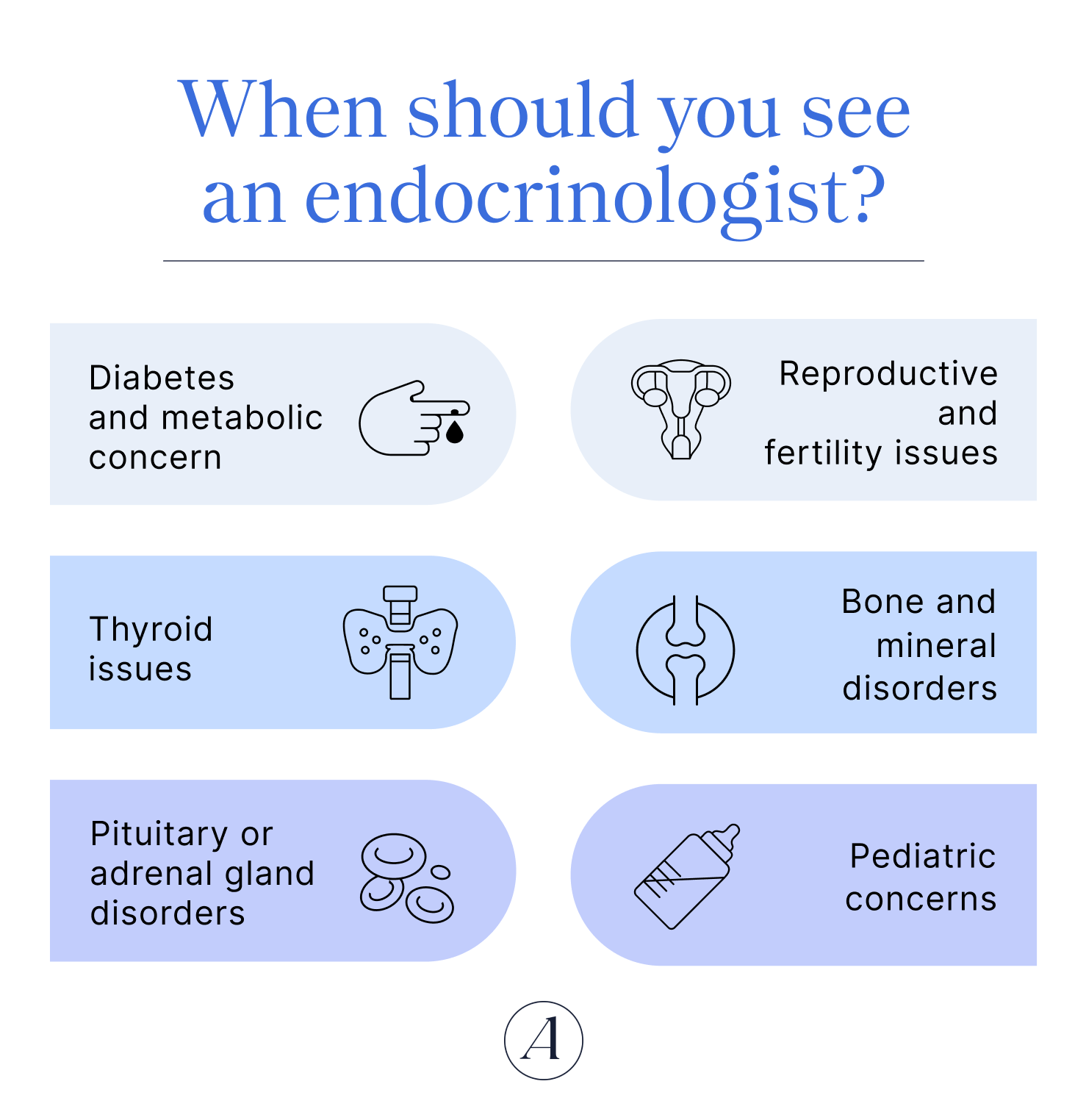
Endocrinologists treat a host of conditions that affect multiple bodily systems. “Some of the most common reasons to see an endocrinologist include diabetes, PCOS, obesity, thyroid disease, pituitary issues, adrenal issues, calcium and bone diseases, and various metabolic disorders,” Dr. Gibson says.
Diabetes and metabolic disorders:
Thyroid disorders:
Pituitary gland disorders:
Reproductive and gonadal disorders:
Mineral-metabolism and bone disorders:
Adrenal gland disorders:
Pediatric endocrine disorders:
Miscellaneous complex hormonal and metabolic conditions
In general, reasons to see an endocrinologist include if you have or suspect you have a hormonal imbalance or disorder or an issue with any of the endocrine system glands.
Additionally, an endocrinologist is a crucial expert to see if you have a metabolic health condition, such as diabetes. And they can also help you address fertility concerns.
Here are some signs you need to see an endocrinologist.
If you’ve been diagnosed with prediabetes, type 1 or type 2 diabetes, or latent-autoimmune diabetes in adults (LADA), an endocrinologist can help you manage your glucose (blood sugar) levels and more. You should see an endocrinologist if you experience the following:
If you’ve ever thought, I need to see a thyroid doctor, then an endocrinologist is who you are looking for. An endocrinology appointment may be necessary if:
The pituitary gland is your “master gland,” located at your brain’s base. It controls and interacts with many of the other glands of the endocrine system. You have two adrenal glands, one located atop each kidney. A key function of the adrenals is their production of stress hormones, such cortisol, epinephrine (adrenaline), and norepinephrine (noradrenaline). You may need to see an endocrinologist for these glands if:
Fertility issues, menstrual cycle concerns, sexual dysfunction, and the menopause transition are all reasons you might also see an endocrinologist. Get checked out if:
You may not think of the field of endocrinology as dealing with your bones. But several hormones and glands control bone and mineral metabolism. Hormones help regulate how the body absorbs and stores key minerals, which are crucial for bone, nerve, and muscle health and function. You may need to see an endocrinologist if:
Pediatric endocrinologists can help with issues related to puberty, growth, and development. Your child may need to see an endocrinologist if:
When you experience unexplained symptoms that you suspect are related to your hormones, you may need to see an endocrinologist. Get checked out if:
“Endocrinologists are very thorough specialists,” says Dr. Gibson. “During a first visit, they will take a very detailed history of your present illness and conduct a comprehensive physical examination.”
She adds, “Because they rely heavily on objective data, they will likely order laboratory tests and imaging studies relevant to the specific hormone condition. Treatment, which might involve suppressing, stimulating, or otherwise addressing the particular hormone imbalance, is typically discussed and offered to patients as well.”
Since your hormones and the glands that produce them affect nearly every area of the body, endocrinologists often must collaborate with other members of your care team to help address the complete picture of a symptom or condition.
“We often act as ‘detectives’ to diagnose specific conditions and then work with other specialists to coordinate treatment plans,” Dr. Gibson says. “For instance, we might work with gynecologists for patients experiencing reproductive or menstrual issues, cardiologists for hormone-related hypertension, or with neurosurgeons for patients with pituitary conditions.”
The most common disease endocrinologists treat is diabetes. However, other common conditions include thyroid disease and PCOS.
Endocrinologists are specialists in the endocrine system, which includes several glands and the hormones they produce.
Yes, an endocrinologist is a key part of the care team for people who have diabetes.
You might see an endocrinologist if you are experiencing symptoms related to an endocrine system gland or the hormones they produce. Your hormones affect many facets of your health, including sleep, weight or body composition, fertility, metabolic health, and more.
“I was given an explanation of how my hormonal imbalance was affecting me as a whole - body & mind - & tools so that we could start to manage my condition. I am happy to announce after a year of trying, I found out that I was pregnant & I couldn’t be happier!”


“This is genuinely the first time in my 7 years of being diagnosed, that I have felt seen and heard.”

“The Allara Community gives me the courage and support to continue my PCOS journey - I am never afraid to ask the hard questions and love hearing from other women with the same challenges.”

"My doctor went above and beyond making sure I had all the necessary tests, but also tremendously helped me in understanding my diagnosis, helping me change my lifestyle, and making sure I get the treatment I deserve."

"Before Allara I had no real direction or understanding of what it meant to have PCOS. Now I have a team of people that take time to explain every single thing to me, ask me how I feel and let me be a part of my treatment plan."


