

last updated:
December 17, 2025
min read
Weight gain in perimenopause: a hormonal perspective




It’s completely normal for your weight to change during perimenopause. Hormonal shifts, aging, and lifestyle factors all play a role, but focusing on movement, nutrition, sleep, and stress management can help change how you look and feel.
Our bodies change and fluctuate throughout our lives. And weight gain is often an unavoidable part of midlife, especially during perimenopause — the years-long transition to menopause.
You reach menopause when you haven’t had a period for a year. But the road to menopause, perimenopause, extends well beyond this year, typically lasting between two to four years, with early changes starting up to a decade before. Most people reach menopause between their late 40s and early 50s. This means symptoms associated with perimenopause, like hormonal weight gain, can begin as early as your mid to late-30s and be totally normal.
It can be jarring to notice your body changing, especially if you feel like you have no control over it. While many of these perimenopause-related changes are due to aging and hormonal fluctuations, you have more control over your health than you might think.
Understanding why perimenopause weight gain happens, the hormones involved, and how to support your health and wellbeing, will help you navigate this time and the years beyond.
Aging is the strongest predictor of weight gain. Overall, as you age, you lose muscle and gain body fat. This happens to everyone, regardless of their sex.
Aging plays the greatest role in midlife weight gain, larger than perimenopause or menopause. Beyond normal aging, weight gain in perimenopause is largely due to a variety of hormonal and metabolic factors. And these changes can lead to an increase in visceral fat, a type of belly fat that surrounds the organs in your midsection. The percentage of visceral fat tends to double or triple as you go from being premenopausal to postmenopausal. This type of weight gain can change your body composition in ways that might be unfamiliar compared to times you’ve gained weight in the past.
No matter your age, most weight gain is due to differences between the calories you consume and the energy you use.
For your weight to stay the same, the calories you consume should be about equal to the energy used in a day, what’s known as your total energy expenditure. Your total energy expenditure isn’t just the time you spend being physically active. It’s a combination of the calories burned through rest (your basal or resting metabolic rate), daily movement, and digestion. Your resting metabolic rate is responsible for up to 80% of your total energy expenditure.
As you age, your resting metabolic rate decreases, making it easier to gain weight while maintaining your usual dietary and exercise habits. The higher your muscle mass is, the higher your resting metabolic rate will be. But muscle mass decreases with age, too. After the age of 30, you lose up to 8% of your muscle mass per decade.
“When we are dealing with perimenopause, we also run into changes in muscle and tissue structure as our estrogen and testosterone decline,” says Hilary Booth, MS, APRN, WHNP-BC. Decreasing estrogen levels can also increase inflammation, negatively affecting muscle mass. Lower androgen levels may also lead to lower lean body mass and sarcopenia, muscle mass loss associated with aging.
“We can't necessarily prevent it entirely, but we can certainly slow its progress,” Booth adds.
Vasomotor symptoms, the name for the hot flashes and night sweats associated with declining estrogen levels, can also increase the likelihood of weight gain. Hot flashes and night sweats are very common. As many as three in four people will experience them at some point after starting perimenopause.
Vasomotor symptoms are also associated with decreased physical activity and poor sleep quality, two factors that can both lead to weight gain. A study of more than 68,000 women found that those who slept five hours or less per night gained more weight than those who got seven or more hours of sleep.
Complicating matters, you’re also more likely to experience these symptoms if you are overweight or obese. Maintaining a healthy weight can help reduce the intensity and frequency of hot flashes and night sweats.
A family history of obesity can also make it more likely that you’ll gain weight during perimenopause. Having one or more parents who are overweight doubles your risk of obesity compared to those with parents who were not overweight by age 50. Experiencing childhood obesity also increases your risk of perimenopausal weight gain, as does getting your first period at a younger age.
Perimenopause is often a stressful time. There’s a lot to juggle — whether you’re working, raising kids, helping elderly parents, or all of the above. And that doesn’t factor in how you’re feeling about this time in your life or the ways your body is changing. Given everything going on, it’s only natural that your mental health might fluctuate too.
Stress, anxiety, depression, and sleep issues are all common in perimenopause. And these issues have all been linked to developing obesity in perimenopause. Stress is also associated with unhealthy eating habits including stress or emotional eating, binge eating, and overeating. Over time, these eating patterns can also lead to weight gain.
Stress, aging, and perimenopause also increase your cortisol levels. High cortisol levels can cause weight gain by:
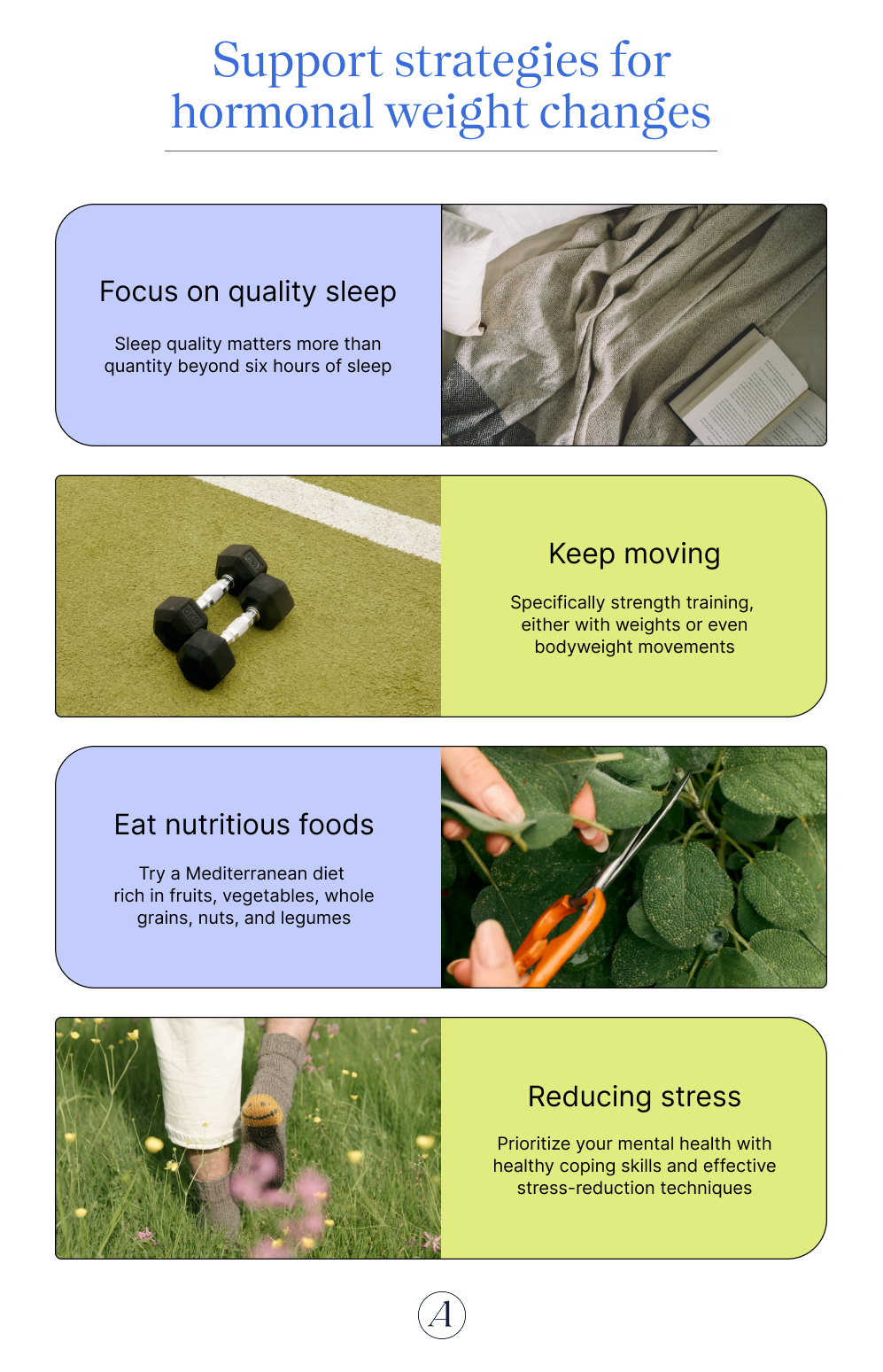
While you may not be able to control how perimenopause and aging affect your cortisol, you can prioritize your mental health and build healthy coping skills to reduce stress.
Weight gain is a normal part of midlife. Research shows that most middle-aged women, regardless of where they are in the transition to menopause, gain about 1.5 lbs per year on average. And nearly 70% of women report gaining weight in perimenopause.
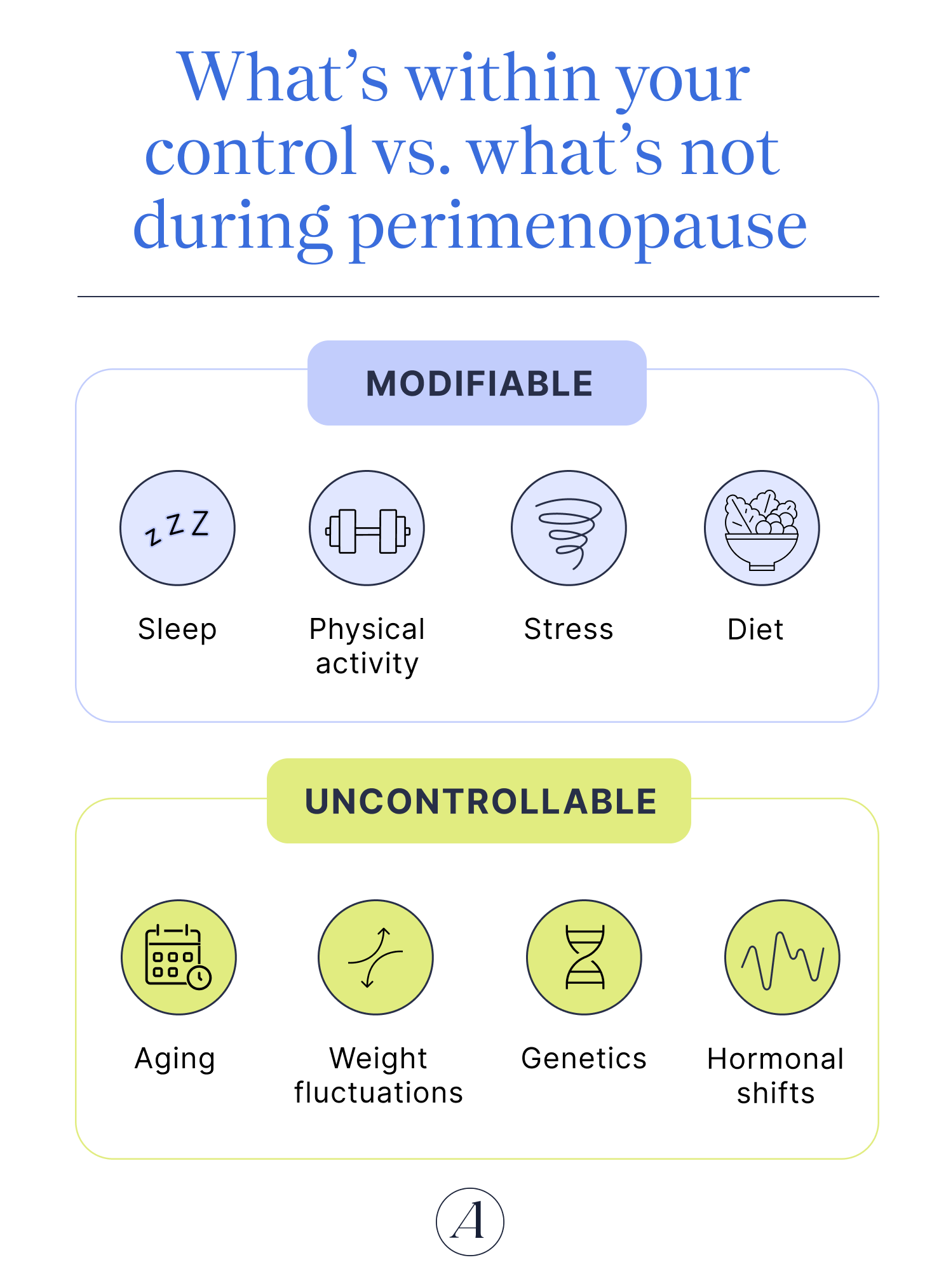
Some of the factors responsible for weight gain are modifiable, meaning you have some control over them. Others are not. Modifiable factors include lifestyle habits like your diet, physical activity, tobacco and alcohol use, and stress.
The factors you can’t control are the complex hormonal and metabolic changes that come with age and perimenopause. And while that might be frustrating, know that it’s totally normal for your body to change as you age. It’s not a matter of willpower or determination; it’s biology.
You have a few options that can support your health if you’re looking to lose weight in perimenopause. These options focus on addressing your modifiable risk factors, such as exercise, diet, stress, and sleep.
It’s important to prioritize all of these factors rather than just one. For example, diet and exercise are both important individually, but you may not notice any weight loss unless you prioritize both. Restricting calories can lower your metabolism, limiting the amount of calories you burn in general. But when you pair eating fewer calories with increased physical activity, your metabolism and total energy expenditure increase, making weight loss more likely.
Most people, as they age, tend to move less. Nearly 30% of U.S. adults over the age of 50 report getting no physical activity outside of work. But if you want to stay healthy as you age, you need to do the opposite and move more. Movement supports lean body mass, which increases your resting metabolic rate and total energy expenditure. This can help prevent some age-related declines in metabolism.
“Keep moving, specifically strength training, either with weights or even bodyweight movements,” recommends Booth. “The evidence supporting movement of any kind is overwhelming during perimenopause. The more muscle we have, the happier our bones are.”
Those who enter midlife prioritizing and maintaining physical activity are less likely to gain weight as they reach menopause. And it’s never too late to start. The benefits of exercise on weight extend beyond the transition to menopause. Regular physical activity improves insulin sensitivity and glycemic control, lowers cholesterol levels and blood pressure, and decreases the risk of cardiovascular disease.
The obesity guidelines from the American College of Cardiology and American Heart Association Task Force on Practice Guidelines and the Obesity Society recommend at least 2.5-3 hours of brisk walking or similar aerobic exercise per week. But if you want to improve your lean body mass and decrease abdominal fat, focus on resistance exercises like squats, lunges, and planks.
You may think the key to losing weight is eating less, but that often isn’t the case. Research shows that many women actually eat fewer calories as they age. When it comes to diet, quality matters more than quantity. Opt for foods that are high in fiber, calcium, and vitamin C and lower in dietary fat since low-fiber and high-fat diets are linked to midlife weight gain.
Adopting a Mediterranean diet full of fruits, vegetables, whole grains, nuts, and legumes can be a good place to start. The Mediterranean diet has also been shown to both promote weight loss and decrease cardiovascular disease risk.
When it comes to sleep and weight gain, the quality of your sleep matters more than the quantity, as long as you’re getting at least six hours of sleep per night. Those who experienced hot flashes or night sweats and reported sleep issues such as difficulty falling asleep, waking up early, and waking up multiple times throughout the night, were more likely to experience weight gain.
For better sleep, try improving your sleep hygiene. Good sleep practices include winding down at least an hour before bedtime, dimming the lights, and putting your phone and devices away. Sleeping in a cool room with moisture-wicking sheets can also make bedtime more comfortable if you struggle with night sweats. Eating dinner earlier and cutting back on late-night snacking can also improve your sleep quality.
Improving your sleep can also help lower your cortisol levels and reduce stress. Take time for yourself in the evenings and focus on relaxation. Your body and mind will thank you for it.
Perimenopause comes with a lot of changes, and you don’t have to navigate them alone. Reach out to your healthcare provider if changes in your health or weight are starting to feel unmanageable.
“I usually tell folks when you start to really hit a wall, you've done your usual strategy for about two to three months and haven't seen any change, or have seen a continued increase in weight. Or if you're noticing other symptoms like worsening energy, mood changes, sleep disturbance, or abnormal labs that may be a result of weight gain,” says Booth.
Bodies change with age; it’s inevitable. But aging can also increase the risk of other chronic conditions like thyroid disease, diabetes, heart disease, hypertension, sleep disorders, and mental health conditions — all of which can also cause weight gain. If you feel like your health is declining suddenly or without major changes in your routine, ask your primary care provider for a comprehensive health screening.
Bodies change, especially as we age. In mid-life, many people find their body composition changes. And during perimenopause, you may notice your weight shifting more to your midsection. Addressing lifestyle factors like diet and exercise and building good sleep hygiene and coping strategies can help. But, at the end of the day, metabolism and body composition changes are due to complex biological processes, not a lack of willpower.
Can you lose weight in perimenopause?
The older you get, the harder it can be to lose weight. Though it may be harder to lose weight during perimenopause compared to your 20s and 30s, it is possible to maintain healthy habits that support a strong metabolism.
Does HRT help with menopausal weight gain?
Hormone replacement therapy does not help with menopausal weight gain, but it can positively change your body composition. Those using HRT report improvements in lean body mass, decreased insulin resistance, and reduced abdominal fat.
What are the symptoms of perimenopausal weight gain?
Perimenopausal weight gain typically appears as excess abdominal weight and an increase in visceral fat, fat that accumulates around your organs. You may feel as though your belly fat is increasing or notice your waistline getting larger.
What is the average weight gain during perimenopause?
Research suggests that women gain 1.5 lbs per year during the transition to menopause. Perimenopause can last anywhere from two years to up to a decade, which means the total weight gain can range from 3 lbs to 15 lbs.
“I was given an explanation of how my hormonal imbalance was affecting me as a whole - body & mind - & tools so that we could start to manage my condition. I am happy to announce after a year of trying, I found out that I was pregnant & I couldn’t be happier!”


“This is genuinely the first time in my 7 years of being diagnosed, that I have felt seen and heard.”

“The Allara Community gives me the courage and support to continue my PCOS journey - I am never afraid to ask the hard questions and love hearing from other women with the same challenges.”

"My doctor went above and beyond making sure I had all the necessary tests, but also tremendously helped me in understanding my diagnosis, helping me change my lifestyle, and making sure I get the treatment I deserve."

"Before Allara I had no real direction or understanding of what it meant to have PCOS. Now I have a team of people that take time to explain every single thing to me, ask me how I feel and let me be a part of my treatment plan."


