

last updated:
December 17, 2025
min read
The ultimate PCOS diet guide: What to eat for hormone balance



Focusing on your nutrition can be a great way to help manage PCOS symptoms. Diets for PCOS aim to help make you more sensitive to the hormone insulin. Improved insulin sensitivity helps keep your reproductive hormones in balance. But a list of PCOS-friendly foods shouldn’t be restrictive. Read on to learn how expansive a PCOS diet can truly be.
The internet is full of diet and nutrition advice in general, and much of it is mixed and confusing. Add polycystic ovary syndrome (PCOS) to the mix, and the diet advice out there can be overwhelming—not to mention restrictive and unsustainable.
If you have a PCOS diagnosis, understandably you may be looking for the best strategies to manage symptoms. And you may have heard that making nutritional changes can help. That’s true.
“The first line of treatment for PCOS is to make behavior and lifestyle changes,” says Gouri Pimputkar DO, a physician with Allara who is board-certified in obstetrics and gynecology and lifestyle medicine. “Nutrition is a key lifestyle parameter.”
But any discussion about making lifestyle changes for PCOS needs to come with a caveat: Having PCOS is not your fault. The condition results from a mix of genetic, hormonal, and metabolic factors. What you eat does not cause PCOS, but what you eat can help reduce symptoms, including weight gain, unwanted facial or body hair growth, acne, and more, and it may even help with fertility.
However, Dr. Pimputkar notes, “There is no one particular diet that is superior to the other for the management of PCOS.” Although some key dietary strategies can help, she adds, “Ultimately, whatever nutrition plan that is sustainable and balanced, is what is recommended.” This means that a PCOS diet or PCOS meals don’t have to be restrictive to be effective.
In this article, we explore the role of insulin resistance in PCOS, PCOS-friendly foods, a PCOS diet plan, additional PCOS self-care strategies, and more.
No single diet is the ultimate diet for PCOS. But a key component of any diet to help manage the condition is to improve insulin sensitivity.
“Insulin resistance is very common when it comes to PCOS,” Dr. Pimputkar says. “This is where insulin is present to convert glucose into energy for important cellular function, but it is just not working well.”
The terms insulin sensitivity and insulin resistance can get a little confusing, so let’s unpack them by exploring how insulin works and why this hormone is implicated in PCOS.
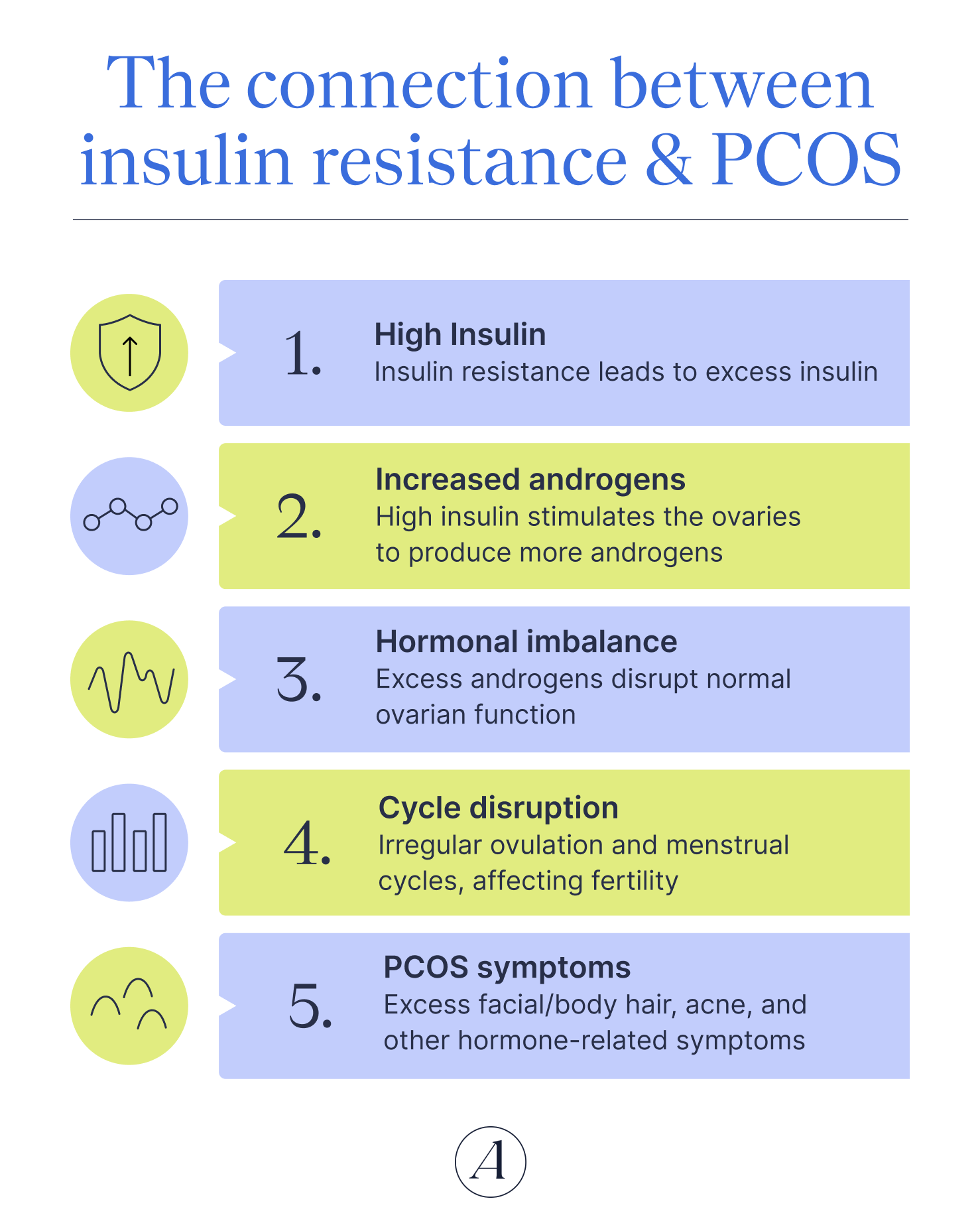
How insulin works:
Insulin resistance:
Insulin sensitivity:
Insulin resistance and PCOS:
“Ultimately, patients with PCOS will have an increased risk of cholesterol disturbances, cardiovascular disease, prediabetes, and diabetes,” Dr. Pimputkar says. Dietary strategies for PCOS aim to counteract insulin resistance by restoring insulin sensitivity.
Although PCOS diets help counteract insulin resistance, they don’t have to be restrictive. In fact, they shouldn’t be restrictive at all. You need adequate levels of the three macronutrients (fat, protein, and carbohydrates) and a host of micronutrients, meaning vitamins and minerals, for your body to thrive. Let’s take a look at some foods to eat for PCOS.
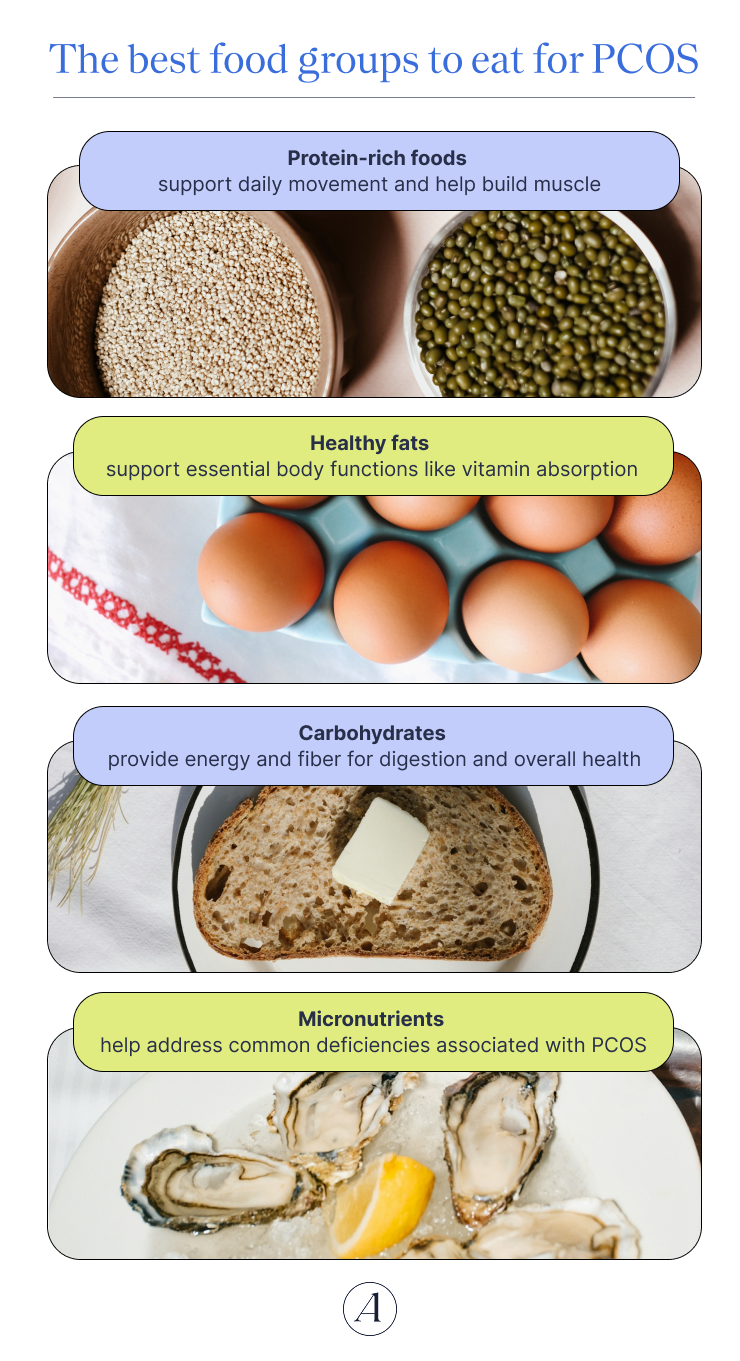
Everyone needs protein to support everyday movement and activities and to help maintain muscle mass and even build muscle in conjunction with strength training. Research shows that diets high in protein can help manage PCOS. You can get protein from fish, lean meat and poultry, legumes, nuts, and seeds.
Benefits of protein:
Fats sometimes get a bad rap because of their name and their higher calorie content when compared to protein or carbs. However, the body needs healthy fats for survival and optimal functioning. And eating fats doesn’t mean you’ll automatically store the nutrient fat.
Instead, consuming fats can even be a great strategy for managing PCOS. Some research suggests an association between a deficiency in omega-3 fatty acids and the condition. You can get these healthy fats from nuts, seeds, and fatty fish. Other great sources of healthy fats in general include olive oil, avocado oil, and avocados.
Benefits of fats:
Carbohydrates also sometimes get a bad reputation in diet advice, but the truth is you need carbohydrates for energy. Plus, carbohydrates are where you get your fiber, a crucial nutrient for gut health and more. Carbohydrates come from several sources, mainly plant foods. But dairy products also contain carbohydrates in the form of lactose.
Benefits of carbohydrates, especially fiber-rich options:
Micronutrients are the vitamins and minerals your body needs to function. Research shows an association between some micronutrient deficiencies and PCOS. That doesn’t mean that these deficiencies cause PCOS. But people with the condition may be more likely to have deficiencies for the micronutrients in the table below, so focusing on upping your intake with these foods may help.
Calcium
Milk, yogurt, cheese, fortified plant milks, almonds, tofu, sardines, kale, broccoli
Chromium
Broccoli, whole grains, potatoes, green beans, meat, nuts, seafood
Magnesium
Almonds, cashews, peanuts, pumpkin seeds, spinach, black beans, whole grains, avocado, dark chocolate
Selenium
Brazil nuts, seafood (tuna, sardines), eggs, whole grains, poultry, sunflower seeds
Zinc
Beef, chicken, oysters, beans, lentils, chickpeas, pumpkin seeds, whole grains, dairy products
Folic Acid (Vitamin B9)
Leafy greens (spinach, kale), lentils, black-eyed peas, asparagus, citrus fruits, avocados, fortified cereals, breads, pasta
Vitamin C
Oranges, strawberries, kiwi, pineapple, bell peppers, tomatoes, broccoli, Brussels sprouts, potatoes
Vitamin B12
Beef, fish (salmon, tuna), eggs, milk, cheese, yogurt, fortified cereals, nutritional yeast (fortified)
Vitamin D
Fortified milk/plant milks, fatty fish (salmon, mackerel), egg yolks, fortified cereals, mushrooms (UV-exposed)
You may have heard that some foods are anti-inflammatory, while others can cause inflammation. That’s true. In general, most whole foods have anti-inflammatory properties.
Whole foods are those that are in or at least resemble their natural form. Think carrots rather than carrot cake, or apples rather than apple pie. That doesn’t mean that the occasional slice of either treat is off-limits. Again, a diet for PCOS should be all about balance, rather than restriction.
Now you might be wondering about which foods to avoid with PCOS. But that word “avoid” isn’t a good one because it evokes restriction. If you have PCOS, you don’t need to have a restrictive diet. By incorporating the wide variety of foods noted in the previous section, you can find good balance.
A good rule of thumb is to take an additive approach to a PCOS diet rather than a limiting one. By crafting a diet full of foods that promote insulin sensitivity, you will naturally reduce your intake of ones that might contribute to insulin resistance. Let’s look at some foods the internet likes to say are “off-limits” to people with PCOS and see how they can be incorporated into a balanced diet in moderation. Ultimately, you can land on a PCOS meal plan that fits your unique tastes and preferences.
These packaged convenience foods often contain additives that can disrupt hormonal health. They bear little resemblance to foods in their natural state, and they can contribute to insulin resistance. That doesn’t mean you must eliminate them altogether if you have some favorites. Just eat those in moderation when the mood strikes.
Plus, keep in mind that some processed foods can even be beneficial. For example, protein powders are technically processed foods as are plant-based milks. But both can offer valuable nutrients. When considering these foods, choose options with short lists of ingredients you recognize and that keep added sugar and sodium to a minimum.
Refined carbohydrates, such as white rice, pasta, and bread, have had their protein and fiber stripped out through processing. Without their protein and fiber, these foods can lead to rapid blood sugar spikes. Reducing your intake of them in favor of whole grains is a great strategy.
But again, you don’t have to eliminate refined carbs from your diet completely. Instead, when you do eat them, have a small portion and pair with protein and fiber to help slow their absorption. What about gluten, a protein found in some grains? You only need to avoid gluten if you have a condition such as Celiac disease or a gluten sensitivity.
The idea that all sugary foods are bad for you is a myth. For example, an apple contains fructose, a naturally occurring sugar, but it also contains a nice dose of fiber to slow the absorption of the sugar into your bloodstream. It also offers beneficial micronutrients. Dairy also contains sugar in the form of lactose. And as long as you’re not lactose intolerant, dairy can be a part of a healthy diet for PCOS.
Now let’s consider added sugar. Reducing your intake of added sugar is a helpful PCOS diet strategy to promote insulin sensitivity. But you can still indulge in the occasional scoop of ice cream or sweet treat. Think about consistency over perfection when reducing your sugar intake.
Content about healthy vs unhealthy fat can get a little confusing. The main thing to know is that the key fat that is harmful is trans fats. These fats can clog arteries and lead to inflammation. The United States has banned the addition of artificial trans fats to foods. However, some cooking methods that use high heat on certain oils can create trans fats.
A good rule of thumb with PCOS, and for anyone for that matter, is to limit your consumption of fried foods and to stick to using olive oil or avocado oil as much as possible when cooking at home.
What about saturated fat? S Experts recommend keeping saturated fat intake on the lower side for PCOS. This is because some research suggests saturated fat may contribute to insulin resistance and hyperandrogenism.
Most saturated fats come from animal sources, such as meat and dairy, and some oils that are solid at room temperature, such as palm and coconut. Again, these foods can provide some valuable macro- and micronutrients, so finding balance is key.
Changing your diet is only one way to help manage PCOS. Other lifestyle changes can also support hormonal health and promote insulin sensitivity.
“Prioritizing intentional exercise and movement is key to improving insulin [sensitivity],” Dr. Pimputkar says. Movement after meals, for example, helps lower blood sugar spikes and can aid insulin sensitivity over time.
“Similar to nutrition, there is no type of exercise that is better than the other,” she adds. “Pick an exercise routine that meets the recommended requirement of 150 minutes of moderate activity per week, as well as strength training twice a week.”
Focus on getting at least seven to nine hours of sleep per night. “The body needs to rest and recover during sleep,” Dr. Pimputkar says. “Chronic sleep disturbances can alter brain hormones that regulate appetite, and worsen insulin resistance.”
Dr. Pimputkar says anyone with PCOS can benefit from seeing a registered dietitian (RD) to create a customized PCOS diet plan.
“The goal is for the RD to meet the patient where they are at and build a supportive plan from there,” she says. “A registered dietitian can also recommend supplements that will aid on the journey to improve their current metabolic health, as well as improve the long-term game when it comes to cardiovascular disease and diabetes.”
If you’re looking for comprehensive PCOS care, Allara can help. “Allara’s collaborative model allows patients to truly receive the full scope of care,” Dr. Pimputkar says. “Medical providers are key in diagnosing and managing the chronic hormonal and metabolic condition, and the registered dietitians are instrumental in giving the patient the tools to make an actionable plan. Ultimately, the goal is to empower the patient so that they feel like they are in control of their hormonal health.”
PCOS is not considered reversable. However, lifestyle changes, and supplements or medications when needed, can help manage the symptoms of the condition.
No single eating plan is superior for managing PCOS. However, dietary patterns that focus on improving insulin sensitivity can help. Strategies include prioritizing protein, healthy fats, and certain vitamins and minerals.
Reducing reliance on ultra-processed foods, refined carbohydrates, added sugars, and trans fats is beneficial to counteract insulin resistance, a common characteristic of PCOS. However, you don’t have to avoid these foods completely to help manage symptoms. Eating a balanced and sustainable diet is key.
“I was given an explanation of how my hormonal imbalance was affecting me as a whole - body & mind - & tools so that we could start to manage my condition. I am happy to announce after a year of trying, I found out that I was pregnant & I couldn’t be happier!”


“This is genuinely the first time in my 7 years of being diagnosed, that I have felt seen and heard.”

“The Allara Community gives me the courage and support to continue my PCOS journey - I am never afraid to ask the hard questions and love hearing from other women with the same challenges.”

"My doctor went above and beyond making sure I had all the necessary tests, but also tremendously helped me in understanding my diagnosis, helping me change my lifestyle, and making sure I get the treatment I deserve."

"Before Allara I had no real direction or understanding of what it meant to have PCOS. Now I have a team of people that take time to explain every single thing to me, ask me how I feel and let me be a part of my treatment plan."


