

last updated:
January 26, 2026
min read
Perimenopause diet tips from a Registered Dietitian



If you’ve hit your late 30s or early 40s and suddenly feel like your body got new rules without telling you, you’re not imagining things. Perimenopause can change how you gain weight, where you store fat, and how your body responds to food.
That doesn’t mean you have to resort to extreme or restrictive dieting. A supportive perimenopause diet is about working with your hormones, not against them.
Allara’s Lead Dietitian, Felice Ramallo, RDN, breaks down what’s actually happening in your body and shares tried and true tips that support energy, weight stability, and long-term health, without cutting carbs, skipping meals, or obsessing over calories.
Perimenopause is the transitional phase before menopause when estrogen and progesterone levels start to fluctuate. This phase can last several years and often begins in your mid-30s to early 40s.
While one of the earliest symptoms of perimenopause is usually a change in period (longer, shorter, heavier, or lighter), these hormonal shifts affect more than just your menstrual cycle. They influence how sensitive you are to insulin, how efficiently you build muscle, how your body manages stress, and even where fat is stored. That’s why a diet that worked in your 20s or early 30s may suddenly stop delivering results.
This isn’t a personal failure. It’s physiology.
Nearly 70% of women report weight gain during menopause. “It’s frustrating for many women because the weight gain seemingly happens when nothing else has changed,” shares Ramallo.
The likely culprit? Hormones. Hormonal shifts can reduce insulin sensitivity and make it easier to store fat, especially around the midsection.
At the same time, muscle loss accelerates if protein intake and strength training aren’t prioritized. Less muscle means a lower resting metabolic rate, which can feel like your metabolism “slowed overnight."
Ramallo explains it clearly: “Hormonal shifts can alter how your body stores fat and uses energy, and some age-related physiological changes just add to that, which is why the old rules stop working.”
Perimenopause belly fat is common and deeply frustrating. Declining estrogen shifts fat storage toward the abdomen, while stress and poor sleep can further drive fat accumulation in this area.
You can’t spot-reduce with exercise, but slight nutritional changes can help. Eat balanced meals that combine protein, fiber, and fat, limit ultra-processed foods, and don’t forget about your water intake! There’s also a link between chronic stress and belly fat, so consider looking into your cortisol levels and adding stress relief techniques to your daily routines.
Unfortunately, there’s no single “best diet” for perimenopause. Symptoms, stress levels, sleep quality, and activity vary widely, “I tend to stray away from recommending the ‘best’ diet for any condition,” shares Ramallo. “Instead, here at Allara, we create personalized perimenopause diet plans that are tailored to your needs and lifestyle,” she continues.
What works can look different for everyone, but what tends to backfire across the board is extreme restriction. Very low-calorie plans, rigid fasting schedules, or eliminating entire food groups can increase stress hormones and worsen fatigue, cravings, and weight retention.
“A supportive perimenopause diet focuses on stabilizing blood sugar, protecting muscle mass, and reducing inflammation, not chasing a smaller number on the scale,” counsels Ramallo.
Everyone is different, and their needs are, too. You may do better on a low-carb diet, while your friend finds that a plant-based diet fits their nutritional needs and lifestyle. We’ve shared a lengthy, detailed list of six common diets and their pros and cons, but below is a quick breakdown.
Emphasizes vegetables, plant-based proteins, and healthy fats, along with seafood. Often hailed as a gold-standard blueprint for a generally healthy diet across age groups.
Designed to mimic the diet of prehistoric hunter-gatherers with a focus on whole foods, protein, and very limited processed foods.
A low-carb, high-fat diet that pushes the body to use ketones for energy rather than carbohydrates. While effective for some, it’s often more restrictive than necessary for achieving most health goals.
Reducing the consumption of animal byproducts such as meat and dairy. Instead, plates are filled with legumes, vegetables and starchy carbohydrates like rice.
Eliminates foods that contain gluten, a family of proteins found in many wheat and some grain products. Recommended for people with celiac disease.
Eliminates dairy products such as milk, cheese, butter and yogurt. Instead, dairy-free alternatives, including oat, soy, and coconut, are used in cooking and regular consumption. Recommended for those with allergies or intolerances.
Several of these diets are usually recommended as part of a treatment plan for a specific condition, so before you embark on any kind of diet, speak with your healthcare provider.
Any sustainable diet has a few non-negotiables–none of which are necessarily eating less. Ramallo notes, “During perimenopause, you may be tempted to eat less, but that’s not always the solution.” Instead of obsessing over restriction, and “good” and “bad” foods, focus on nourishment, along with patterns and swaps that are still filling and tasty.
Proteins are essential macronutrients for everyone, but perimenopausal women especially need them. Research shows that even before menopause, the Appendicular lean mass (ALM) index can be 9-10% lower in late-perimenopausal women than pre-menopausal women.
The current recommended dietary allowance (RDA) for protein is 0.8g per kg of body weight (though some people need closer to 1.2g/kg to build and preserve muscle mass); however, you don’t have to reach that overnight. Work your way up slowly, focusing on whole foods. Protein-rich foods include eggs, fish, poultry, Greek yogurt, tofu, beans, and lentils. Try your best to include protein at every meal, not just dinner.
Fiber is just as important as protein! Aim for 14 grams of fiber for every 1,000 calories you eat.
Incorporating fiber-forward carbohydrates like vegetables, berries, whole grains, and legumes helps stabilize blood sugar and support digestion. These are very different from refined carbs, which spike and crash energy levels.
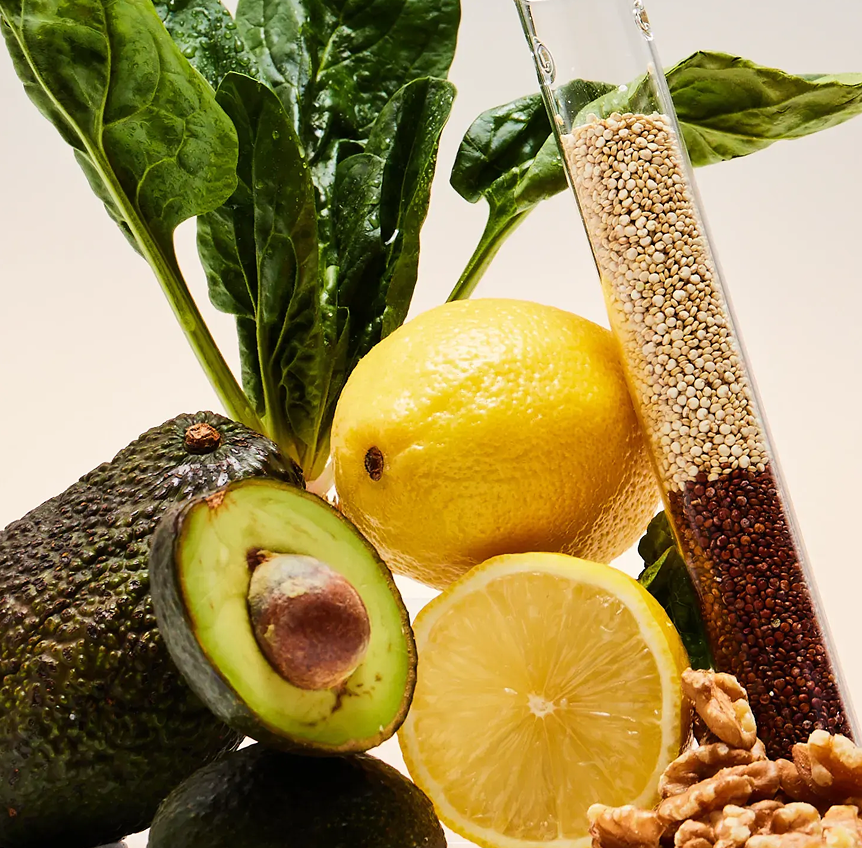
Healthy fats such as olive oil, nuts, seeds, avocado, and fatty fish help you feel satisfied and support heart and hormonal health.
Phytoestrogens are plant-based compounds that can mimic estrogen. Some research suggests that they may help reduce some perimenopause symptoms like hot flashes. They’re commonly found in soy, flaxseed, and legumes. These foods are safe for most people and can be part of a balanced approach that nourishes your body without adding the stress of dieting.
“Losing weight in perimenopause is less about restriction and more about consistency,” Ramallo notes. “Prioritizing protein, fiber, and strength training to gain muscle supports metabolism in a way extreme diets simply don’t.”
Restriction can raise cortisol levels to the upper end of the healthy range, which can affect how the body processes sugar and calories. increase cravings, and stall progress. Incremental changes and consistency are far more effective. Ramallo recommends eating breakfast, regular meals throughout the day, and getting enough protein and fiber.
Perimenopause weight loss may be slower with this approach, and that’s okay. You may even notice the progress with other NSVs (non-scale victories) such as better energy, improved sleep, and more stable moods.
Some habits can intensify symptoms and derail weight loss during perimenopause:
Caffeine timing matters too. You don’t have to give it up, but having that late-afternoon latte can interfere with an already fragile sleep pattern.
Nutrition is powerful, but it isn’t magic. If symptoms are severe or weight changes feel unmanageable, working with a healthcare provider or registered dietitian can help.
They can support your journey with lab work, hormone therapy, and personalized nutrition strategies. They can also eliminate any other underlying causes that may be hindering your progress.
Perimenopause isn’t something to “power through.” It’s a transition that deserves support.
The most effective perimenopause diet isn’t extreme, restrictive, or trendy. “You shouldn’t feel like you’re on a strict diet,” emphasizes Ramallo. She advises a steady, nourishing diet that’s built around working with your changing physiology, not against it. When you focus on protein, fiber, healthy fats, and consistency, you’re not just managing weight; you’re working towards the healthiest version of you.
Working with an Allara RD can be the first step toward finding that balance that supports energy, mood, and long-term health. Discover the Allara care model and learn how to achieve your best self.
“I was given an explanation of how my hormonal imbalance was affecting me as a whole - body & mind - & tools so that we could start to manage my condition. I am happy to announce after a year of trying, I found out that I was pregnant & I couldn’t be happier!”


“This is genuinely the first time in my 7 years of being diagnosed, that I have felt seen and heard.”

“The Allara Community gives me the courage and support to continue my PCOS journey - I am never afraid to ask the hard questions and love hearing from other women with the same challenges.”

"My doctor went above and beyond making sure I had all the necessary tests, but also tremendously helped me in understanding my diagnosis, helping me change my lifestyle, and making sure I get the treatment I deserve."

"Before Allara I had no real direction or understanding of what it meant to have PCOS. Now I have a team of people that take time to explain every single thing to me, ask me how I feel and let me be a part of my treatment plan."


