

last updated:
February 2, 2026
min read
PCOS symptoms: The full list and what they mean


Experiencing irregular periods, new hair growth on your body, or difficulty losing weight? All are potential PCOS symptoms—though they aren’t the only potential signs of PCOS and they could be due to other medical conditions. Here’s a comprehensive list of the potential symptoms of PCOS, plus how to decipher if PCOS or another condition is the culprit.
Polycystic ovary syndrome (PCOS) is a common hormonal condition. Stats on prevalence vary, but as many as one in five people who menstruate have PCOS. While there are some symptoms we often associate with it (fertility problems, irregular periods, acne, etc.), PCOS looks different for everyone, which is part of why it’s underdiagnosed.
“PCOS is complex, and the condition as a whole comes in many different forms and symptoms,” says Gouri Pimputkar DO FACOOG, DipABLM, clinical lead at Allara Health., “Patients with PCOS can often be dismissed because they don’t fit the mold.”
To make matters more confusing, symptoms may also stem from other medical conditions, which is why seeing the right specialist who can conduct PCOS testing is so important. But before you make that appointment, let’s review what the symptoms of PCOS look like and how to tell them apart from other conditions.
PCOS is a common reproductive health disorder (or, in medical speak, an endocrine condition). It’s characterized by a hormonal imbalance, usually manifesting as higher levels of androgens ( male sex hormones) than necessary for someone who menstruates.
To be diagnosed with PCOS, someone must meet at least two of the three Rotterdam Criteria:
The first two criteria can be tricky to determine, since that “evidence” can look different for everyone. While we often think of PCOS as a fertility issue or a reproductive health issue, the evidence shows up throughout the body.
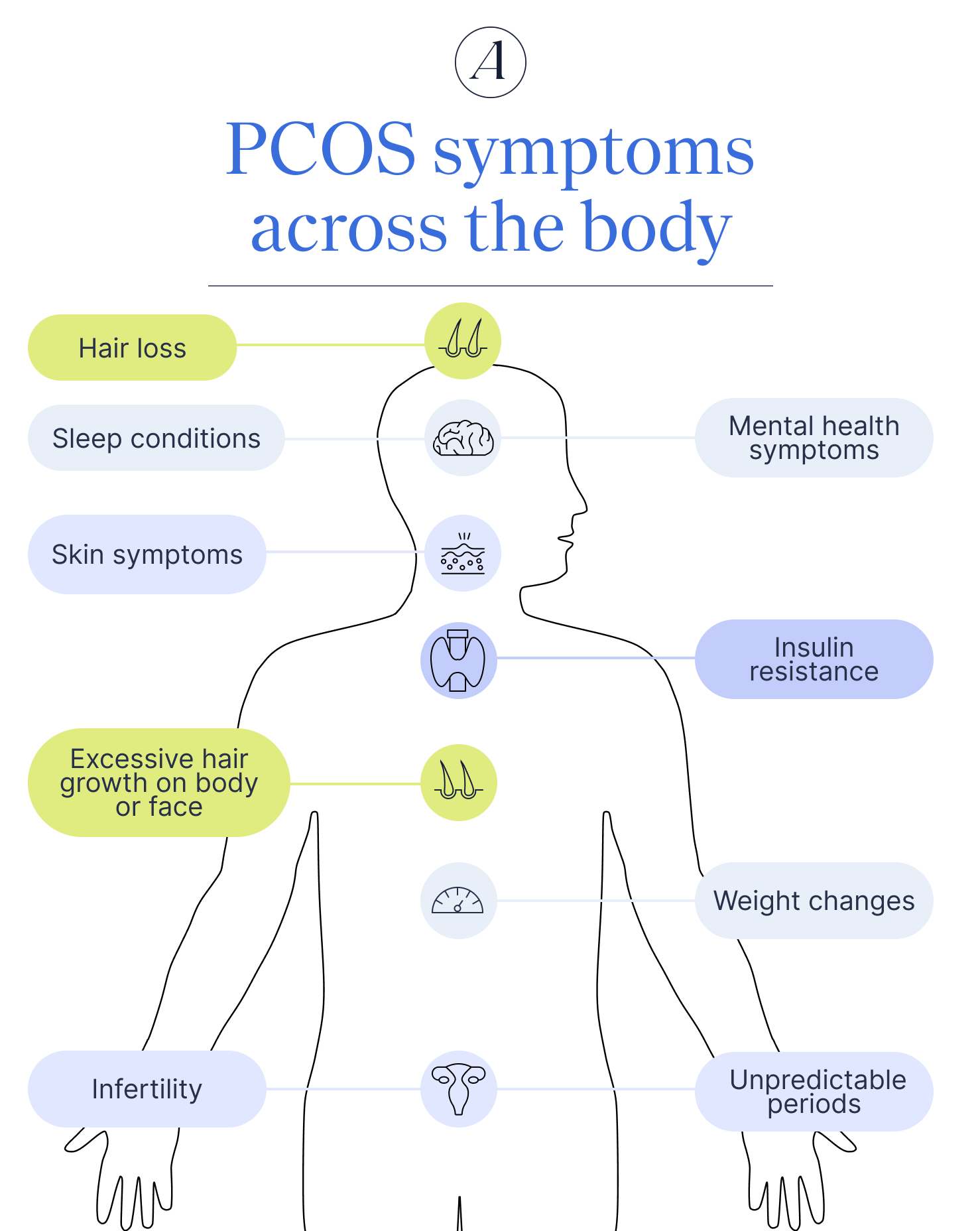
Excessive male hormones, for example, may take the shape of excessive body hair growth, skin symptoms, or even insulin resistance (which sounds unrelated, but we promise to explain later). Oligo-anovulation usually looks like irregular periods, but may also result in infertility or painful periods.
Someone’s environment, lifestyle, genetics, and metabolism all impact what PCOS feels like. Dr. Pimputkar explains, “PCOS comes in all different shapes and sizes, and there are different presentations of the condition.”
She points out that while PCOS symptoms vary, most patients fit into one of four typical subcategories:
When you think of PCOS, the first symptoms that come to mind probably relate to reproductive health. These include PCOS period symptoms, like irregular menstruation or painful periods, and issues with fertility.
When someone has PCOS, their male sex hormone levels are too high. At the same time, there’s an “abnormal expression of estrogen” within the ovaries. Together, these two hormonal changes disrupt the menstrual cycle. Often, the first sign of that interference is skipped or irregular periods.
“Typically patients with PCOS have issues with irregular periods,” says Dr. Pimputkar, “Periods can be spaced out for months at a time or occurring at different times each month.” This can make it hard to track your menstrual cycle—and yes, that may also lead to anxiety or dread when a period is late or missing.
PCOS pain is a very real symptom, though it’s not as common as menstrual irregularities. In one study, almost 30% of people with PCOS reported pain, with cramping during periods being the most reported type.
The reason for painful periods relates back to how PCOS disrupts the menstruation. While periods are the most evident part of this cycle, the high androgen levels may mean your ovaries don’t release eggs as intended. This allows the uterine lining to build up over time.
When you menstruate, the body releases prostaglandins to help the wound contract and release this lining. The shedding of the lining is what causes your period. If the lining is thicker, the body will release more prostaglandins, increasing the contractions and potentially causing pain.
A heavy flow may point toward PCOS. As many as 70% of people with PCOS report heavy bleeding during their menstrual cycle. This is because your period is the body’s release of the uterine lining—and a thicker lining, which PCOS can cause, means a heavier flow.
The “cystic” in polycystic ovary syndrome actually refers to follicles measuring 2-9mm in the ovaries. Cysts are larger sacs filled with fluid that can naturally occur during menstruation. The prefix poly means “much or many” in Greek. When you combine the two together, polycystic refers to enlarged follicles, which are one of the three Rotterdam criteria.
These cysts show up on ultrasounds but are often hard to detect in everyday life since they’re usually symptomless. When they do cause symptoms, they often take the shape of PCOS bloating and abdominal or pelvic pain. Even though these enlarged follicles are, not all cysts are a sign of PCOS—yet another reason it’s important to see a PCOS specialist, such as an endocrinologist or a gynecologist.
Along with skipped or irregular periods, someone may also experience anovulatory periods, which is when there’s a monthly flow but no ovulation. This is associated with infertility, one of the most talked about symptoms of PCOS.
Yet frequently talked about does not equal most common. About 70% of people with PCOS experience oligo-anovulation, which is associated with, but does not always lead to, infertility. That means for 30% of people with PCOS, infertility isn’t a symptom. For the remaining 70%, they are more likely to experience difficulties getting pregnant, but infertility should not be assumed with PCOS.
If someone is susceptible to infertility, working with a reproductive health specialist can help. A specialist can recommend fertility medications and lifestyle changes, such as following a healthy diet or a reduction in body weight, which can increase the likelihood of getting pregnant.
As a hormonal health condition, PCOS impacts parts of the body beyond the reproductive system. This can take the shape of metabolic symptoms, such as weight changes and insulin resistance.
Insulin is a hormone created by the pancreas. It helps blood glucose, aka blood sugar, enter cells in the liver, muscles, and fat. These cells then use insulin for energy. If cells become desensitized to insulin (think: type 2 diabetes), blood sugar levels remain too high for too long. This may lead to a variety of health impacts, including permanent damage to the eyes and nerves. It can also be life-threatening if left untreated.
Many factors increase the risk of insulin resistance, including PCOS. In fact, over 50% of people with PCOS will develop type 2 diabetes before they turn 40. However, it’s important to note there is a strong correlation, not causation, and researchers are still studying if PCOS causes insulin resistance or vice versa.
“Weight gain is also very common with patients who suffer from PCOS,” says Dr. Pimputkar, “This is because PCOS is very much a metabolic condition, in addition to a hormonal condition.”
We can think of hormones like messengers. They deliver messages throughout the body, including to our metabolic system. With PCOS specifically, higher androgen levels may disrupt signals that help with appetite regulation and the process of turning food into energy. Food that isn’t converted to usable energy typically becomes fat and when our appetite isn’t regulated, we may eat more than necessary.
Together, the two effects can make it hard to drop unwanted pounds. The metabolic effects of PCOS may also mean someone gains weight more easily.
Plus, PCOS’ relationship with insulin resistance also plays a role in weight management. Dr. Pimputkar explains, “The insulin metabolism can be affected by the hormonal changes happening at the level of the ovary, which can lead to weight gain and set off a whole cascade of other conditions like high cholesterol, diabetes, and heart disease.”
PCOS affects hormones throughout the body, including those in the gut. This means people with PCOS often have a higher risk of certain gastrointestinal conditions, such as irritable bowel syndrome (IBS). GI conditions often lead to digestive symptoms like constipation, diarrhea, and bloating.
“Patients with PCOS can have complaints of an increase in hair growth in unwanted places or hair loss, hair thinning, as well as acne,” explains Dr. Pimputkar, “All of which is usually a signal of excess androgen or testosterone production.”
Skin PCOS symptoms can be one of the first signs of PCOS. The exact ways PCOS impacts skin health varies, though some of the most common skin symptoms are:
Hyperandrogenism may also lead to hair growth patterns that are more common in people assigned male at birth. This often includes excessive hair growth on the face or body. Hirsutism, facial hair growth in those who menstruate, is especially common. PCOS contributes to upwards of 72% of hirsutism cases.
Ironically, too many androgens leads to hair loss as well as hair growth. More specifically, it leads to thinning hair on the scalp. This is referred to as androgenetic alopecia (aka female pattern hair loss).
Remember how hormones are messengers? Turns out, the brain is on their delivery route too. PCOS’ hormonal impacts can impact mental health—and that’s before we talk about the emotional impact of dealing with PCOS’ physical symptoms.
PCOS creates the perfect storm for mood swings, thanks to three distinct reasons:
Thanks to PCOS mood swings, those with PCOS are at a higher risk for various mental health conditions. For instance, people with PCOS are 2.5 times more likely to experience depression than people without it. Another study suggests 42% of people with PCOS experience anxiety symptoms, compared to 8.5% in people without PCOS.
Eating disorders are also more likely to occur. The most common in people with PCOS is binge eating disorder (BED), which is marked by eating large amounts of food in a short time. The increase in eating disorders might be an emotional response to PCOS’ impact on weight, though research is not conclusive on why this association exists.
PCOS may also disrupt sleep for a few reasons. First, co-existing PCOS and depression may lead to hypersomnia, sleeping too much, or insomnia, sleeping too little. Progesterone also plays a role in regulating sleep—and PCOS messes with progesterone levels. Several hormonal disruptions arethe most likely reason why there’s an extremely strong link between PCOS and insomnia.
PCOS also increases the risk of being overweight or obese. Either of these weight-related conditions may lead to obstructive sleep apnea, a condition where difficulty breathing wakes someone up throughout the night.
People with PCOS are more likely to report low energy than those without PCOS. Researchers aren’t exactly sure why PCOS fatigue occurs, though it may be linked to trouble sleeping, as well as PCOS’ impact on insulin and blood sugar levels.
While the above list is pretty comprehensive, it doesn’t encompass all symptoms of PCOS. Headaches, pelvic pain, and Metabolic Dysfunction-Associated Steatotic Liver Disease (MASLD) are associated with PCOS, though that doesn’t necessarily mean PCOS causes them. In the case of NAFLD, for example, the correlation stems from obesity, which PCOS is a risk factor for.
PCOS increases the risk for some endometrial and uterine cancer when other risk factors are present too. Dr. Pimputkar explains, “For patients who do not have periods regularly, combined with other risk factors, there can also be an increased risk of pre-cancer cells in the uterus eventually leading to endometrial/uterine cancer.”
Some studies also suggest a correlation between PCOS, blood clots, and deep vein thrombosis, though other studies do not find that link. All this goes to say that the jury’s still out on PCOS’ full list of symptoms.
As if PCOS varying symptoms weren’t enough, the hallmark signs of PCOS may also stem from other conditions. Overlapping conditions include thyroid disorders, endometriosis, perimenopause, and functional hypothalamic amenorrhea (FHA).
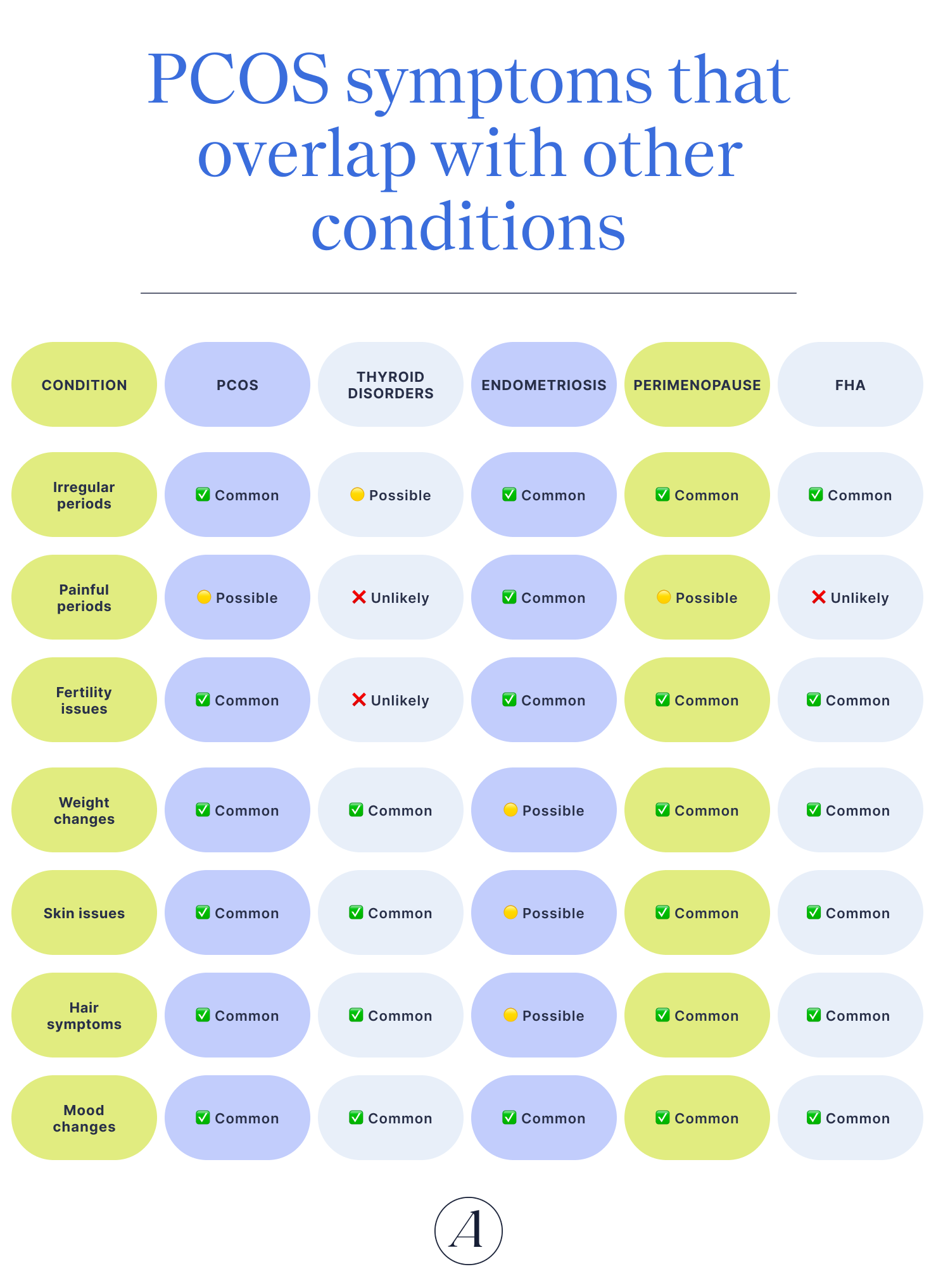
Recognizing these symptoms is only half the battle. Since they overlap with other conditions, it’s hard (insert: impossible) to DIY a PCOS diagnosis. Instead, the first step when symptoms occur is to make an appointment with a PCOS specialist and advocate for yourself.
“Advocate for yourself and do not settle for this is ‘just how it is,’” says Dr. Pimputkar. This often looks like making an appointment with a healthcare provider who has experience treating PCOS, such as the team at Allara. From there, they can conduct a thorough hormonal evaluation, as well as order any imaging that can help present a clearer picture.
Before the appointment, track symptoms, including when they take place and what they feel like. In particular, pay attention to your monthly cycle. “Our periods should be considered a vital sign,” says Dr. Pimputkar, “If periods start becoming irregular or other symptoms become more prominent, it is time to have a discussion with your provider.”
The first signs of PCOS are different for everyone. Some people experience irregular or skipped periods first. Others report the first signs are acne, PCOS skin tags, or excessive hair growth on the body.
Everyone’s experience living with PCOS is unique. Some people report irregular or skipped periods, others have painful or heavy periods. Some experience excessive hair growth on the body or face, hair loss on the scalp, sleep disturbances, mood swings, or changes in skin. No matter how PCOS manifests, it can impact your quality of life. Working with a PCOS specialist, such as the team at Allara Health, can help make symptoms more manageable.
The only way to confirm if you have PCOS is to make an appointment with a PCOS specialist, such as an endocrinologist or gynecologist. They can assess your symptoms and order imaging and hormonal evaluations to determine if PCOS or something else is causing your symptoms.
“I was given an explanation of how my hormonal imbalance was affecting me as a whole - body & mind - & tools so that we could start to manage my condition. I am happy to announce after a year of trying, I found out that I was pregnant & I couldn’t be happier!”


“This is genuinely the first time in my 7 years of being diagnosed, that I have felt seen and heard.”

“The Allara Community gives me the courage and support to continue my PCOS journey - I am never afraid to ask the hard questions and love hearing from other women with the same challenges.”

"My doctor went above and beyond making sure I had all the necessary tests, but also tremendously helped me in understanding my diagnosis, helping me change my lifestyle, and making sure I get the treatment I deserve."

"Before Allara I had no real direction or understanding of what it meant to have PCOS. Now I have a team of people that take time to explain every single thing to me, ask me how I feel and let me be a part of my treatment plan."


