

last updated:
February 20, 2026
min read
What are the first signs of PCOS?


PCOS often starts gradually and quietly; irregular periods, stubborn acne, hair changes, or weight gain that get brushed off as “normal.” It’s important to pay attention to these patterns since treating symptoms early can help improve your health in the long run.
It’s easy to miss the early signs of polycystic ovarian syndrome or PCOS. Some people might not experience the more physical symptoms of PCOS, like increased body and facial hair, acne, and weight gain, but may have slightly irregular cycles they grew up believing were normal. Others might have had those physical symptoms in their teens, but were told they were a normal part of being a teenager.
Whether irregular periods, skin problems, weight gain, or changes in facial, body, and scalp hair have followed you from puberty into adulthood, or these symptoms first appeared (or became a lot harder to brush aside) in your 20s or even 30s, they might be a sign you have PCOS.
Many of the early symptoms of PCOS go unnoticed at first. These signs may be written off as a normal part of puberty or the result of stress. Symptoms of PCOS can develop as early as the pre-teen years, but most people don’t get a diagnosis until their mid-20s. Puberty is a time of many changes, so symptoms like acne, weight gain, or irregular periods often get dismissed as a normal part of development.
Others develop PCOS after their teen years. In these cases, early symptoms may be misattributed to stress or diet and lifestyle. Symptoms also tend to develop gradually, making them even easier to brush off. Early symptoms typically range from irregular periods to weight gain and hair and skin changes.
Missed periods and or long menstrual cycles are often one of the earliest signs of PCOS. However, it can take up to two years from your first period for your hormones to stabilize and your cycle become regular. Because of this, healthcare providers often dismiss skipped periods or long cycles as normal for teens.
An increased number of antral follicles is a characteristic of PCOS. These are tiny sacs in the ovary containing an egg, that create the “cyst-like” appearance of PCOS. But an increased number of follicles is also common during puberty—making PCOS even more challenging to diagnose in teens.
“Typically, we observe patients with suspected PCOS over a period of a few years after they start their period before officially giving them a diagnosis of PCOS by ultrasound criteria,” says Gouri Pimputkar, DO, clinical lead at Allara Health. “Usually, by 8 years after starting their period, an ultrasound should be able to demonstrate polycystic changes of the ovary.”
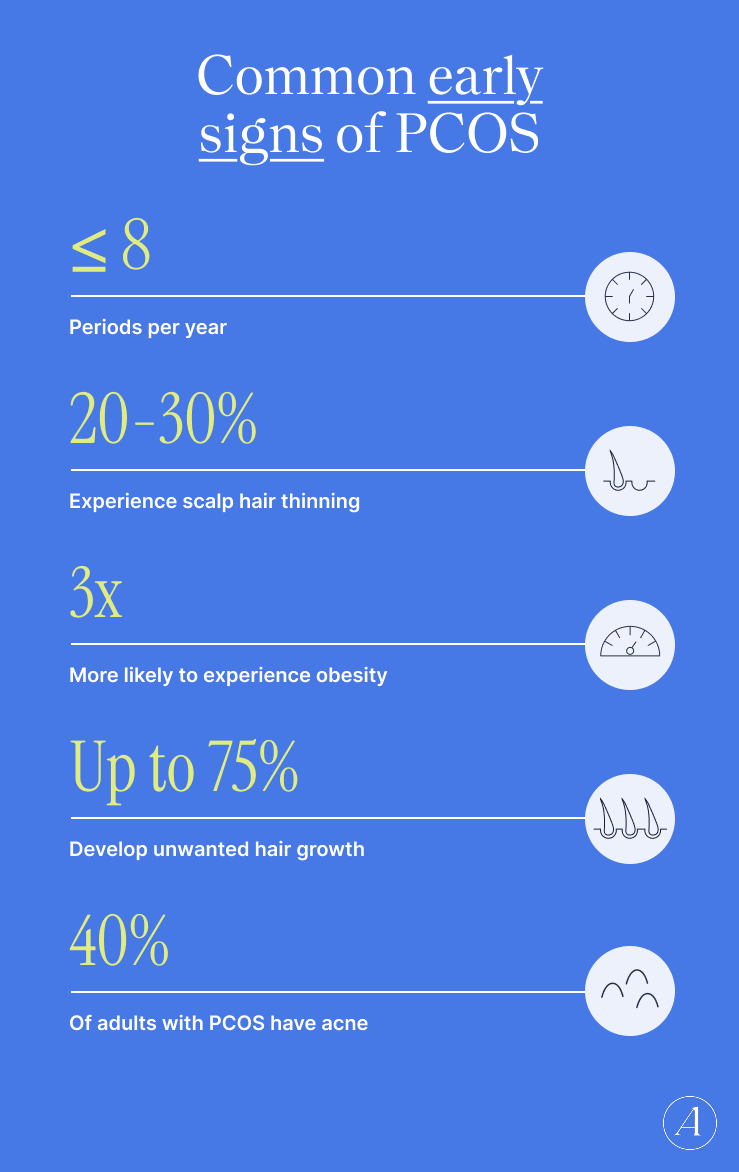
If you have been menstruating for years and are not on hormonal birth control, irregular or missed periods can be a sign of an underlying hormone imbalance. With PCOS, high androgen and luteinizing hormone (LH) levels can make it harder for your body to ovulate, leading to longer menstrual cycles. It’s important to let your healthcare provider know if your cycles are consistently longer than 35 days or if you have eight or fewer periods per year, as it may be a sign you have PCOS.
About 20 to 30% of people with PCOS will experience hair loss. High androgen levels are thought to cause both PCOS-related hair loss and excess body and facial hair growth. (Though not everyone with high androgen levels will lose their hair, while others who experience hair loss have normal hormone values.)
PCOS-related hair loss typically clusters around the middle of the scalp, by your part, and may be more significant toward the front, where your hair meets your forehead. The hair around this area may also fall out more easily or appear thinner than other areas on your head. Hair loss can be gradual, so you may not notice your hair thinning in the early stages.
Unwanted hair growth, on the other hand, typically appears on the upper lip, chin, neck, chest, and back. This type of hair growth is known as hirsutism, a type of dark, thick body hair typically associated with male bodies. Hirsutism affects up to 75% of people with PCOS.
People with PCOS are three times more likely to experience obesity. PCOS-related weight gain tends to accumulate around the midsection. Hormonal imbalances can cause weight gain, but weight gain can also make hormonal imbalances worse. Obesity leads to increased androgen levels and insulin resistance, which can worsen symptoms of PCOS. Weight gain can also cause issues with ovulation, leading to missed periods or longer menstrual cycles.
Acne is a common symptom of PCOS due to high androgen levels. Treatment-resistant acne that begins before your first period is often a sign of hyperandrogenism (an excess of androgens), a hallmark of PCOS.
Nearly 60% of teens and 40% of people over the age of 19 with PCOS experience acne. PCOS-related acne tends to cluster around the jaw and upper neck and is often deeper and harder to treat. Excess androgens stimulate the glands in your skin responsible for oil production, leading to oily skin and acne. Insulin resistance and chronic inflammation, both common in people with PCOS, can also make acne more severe and harder to treat.
About one in four people with PCOS also have insulin resistance. Insulin resistance can cause a variety of symptoms, which might, but are less likely to, be some of the first symptoms you notice along your PCOS journey. These symptoms include:
Over time, insulin resistance can become type two diabetes, making it important to take changes in your health seriously.
PCOS can present as mild for some people, while others develop worsening symptoms. Without proper diagnosis and treatment, symptoms can worsen over time.
Later symptoms of PCOS may include:
PCOS can greatly affect your metabolic health, especially when left untreated. Fortunately, maintaining a nutritious diet, staying active, and medication can all help manage PCOS, thereby reducing the likelihood of further chronic health issues. “There are many lifestyle and nutrition changes that can be adapted early on to improve the metabolic risks associated with PCOS later on in adulthood,” Pimputkar explains.
Improving your metabolic health can also help your reproductive health. But some people with PCOS will still need help conceiving, even with lifestyle changes. Fertility treatments like ovulation induction and in vitro fertilization can help.
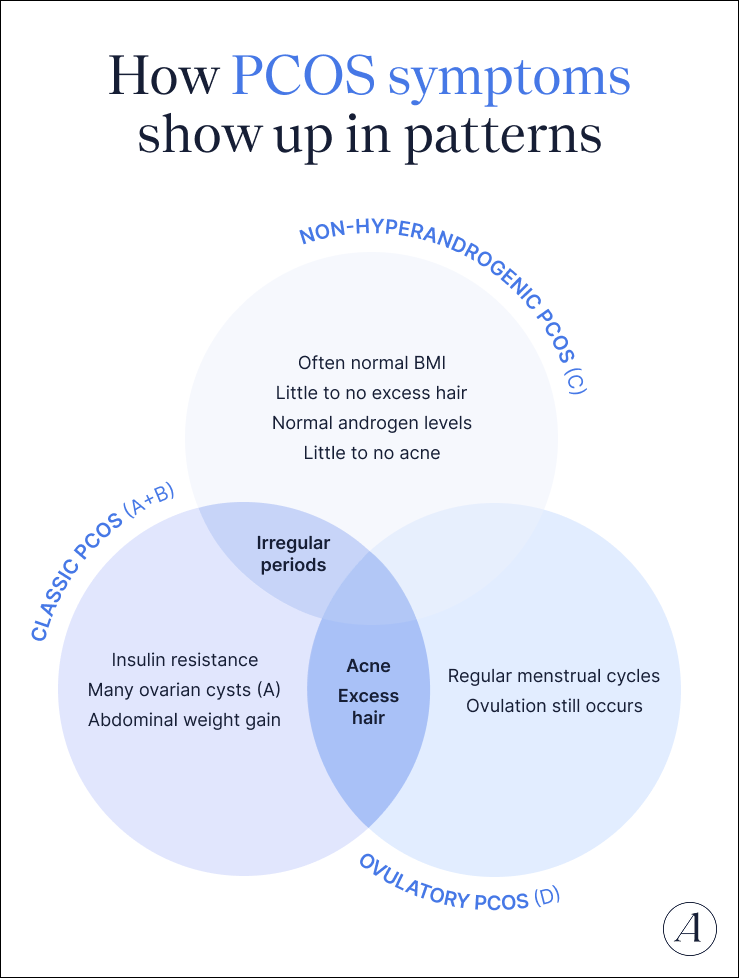
PCOS can look different from person to person. There are four subtypes of PCOS, and which one you have might affect the symptoms you experience.
It’s important to advocate for your health and share any changes you’ve noticed in your body or well-being with your healthcare provider. If a symptom is causing you discomfort, mention it. You shouldn’t wait until your symptoms are unbearable to seek help.
“It is important to remember that PCOS exists in many forms and evolves over time,” says Pimputkar. “The key is to have open communication with a provider that you trust and has a thorough understanding of all the subtle nuances of PCOS.”
Tracking your symptoms and noting when they started can help your healthcare provider make a diagnosis. If you have irregular periods, it can be helpful to share any cycle logs you might have, especially if you have consistently had fewer than eight periods per year and have been menstruating for at least two years.
Other symptoms that can be helpful to note are changes in your weight, increases in body or facial hair, thinning scalp hair, and changes in your skin, such as acne or dark patches. Note how long you’ve had these symptoms for, any over-the-counter remedies or lifestyle changes you may have tried to address them, and what the results were.
Advocating for yourself can be tiresome, especially if you have symptoms you feel aren’t being taken seriously. Don’t hesitate to reach out for a second opinion with a provider who specializes in PCOS.
Healthcare providers use the Rotterdam criteria to diagnose PCOS. A comprehensive evaluation typically includes a transvaginal ultrasound to examine your ovaries and blood tests to check your hormone levels. Health care providers may repeat these tests at different points in your menstrual cycle, depending on your results. Having at least two of the following typically indicates PCOS:
Getting a PCOS diagnosis can take time, especially if you’re young, since it can take a while for menstrual cycles to become regular. Other times, stress and lifestyle take the blame for symptoms like hair loss and weight gain. PCOS can also mimic symptoms of other conditions like insulin resistance, diabetes, and hypothyroidism—so it may take your healthcare provider time and testing to make the most accurate diagnosis.
It can be easy to miss the early symptoms of PCOS, especially if they started when you were a teen. Since PCOS is often overlooked, it is important that you listen to your body and be vocal about any physical changes you see, especially if they get worse over time.
It’s important to find a healthcare provider who not only listens to but also addresses your concerns. Allara Health can help you get a diagnosis and a personalized treatment plan that merges nutrition, lifestyle, medication, and ongoing expert support.
“I was given an explanation of how my hormonal imbalance was affecting me as a whole - body & mind - & tools so that we could start to manage my condition. I am happy to announce after a year of trying, I found out that I was pregnant & I couldn’t be happier!”


“This is genuinely the first time in my 7 years of being diagnosed, that I have felt seen and heard.”

“The Allara Community gives me the courage and support to continue my PCOS journey - I am never afraid to ask the hard questions and love hearing from other women with the same challenges.”

"My doctor went above and beyond making sure I had all the necessary tests, but also tremendously helped me in understanding my diagnosis, helping me change my lifestyle, and making sure I get the treatment I deserve."

"Before Allara I had no real direction or understanding of what it meant to have PCOS. Now I have a team of people that take time to explain every single thing to me, ask me how I feel and let me be a part of my treatment plan."


